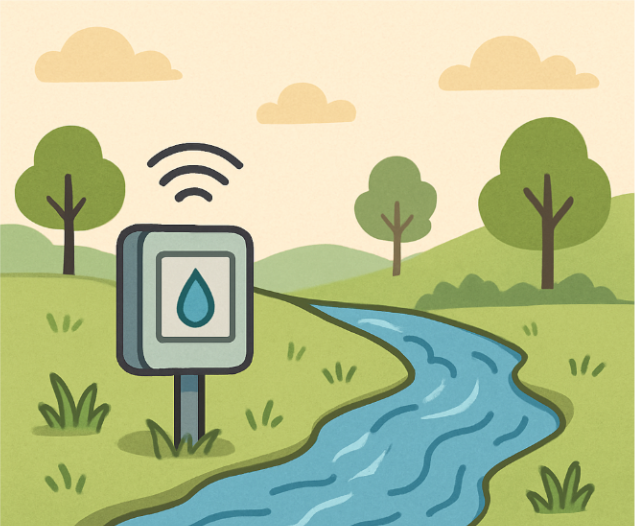
Ellenex pH Sensors: Precision Water Quality in the Water Infrastructure Monitoring

Updated: May 5
# The Future of Aquaculture: Enhancing Efficiency with Smart Water Management

With global aquaculture production surpassing 185 million tonnes, mariculture now contributes over 40% of the total output. As this industry scales, it is no longer viewed merely as farming, but as a critical component of industrial Infrastructure Monitoring. Ensuring the health of these systems requires a multi-layered approach that bridges the gap between physical assets and digital oversight.
The Hierarchy of Smart Water Infrastructure Monitoring
To understand the value of precision sensing, we must view it through the lens of a broader technological cluster.
The overarching discipline of using connected sensors and cloud platforms to track the health, performance, and availability of back-end components in real-time.
A specialized sub-cluster focused on the assets that control water flow, storage, and treatment, such as pumps, pipelines, and tanks.
The most granular level of this ecosystem, where parameters like pH, Dissolved Oxygen (DO), and salinity are measured to ensure the water meets biological and industrial standards.
The global fish market has experienced a profound transformation in recent decades, marked notably by the rise of aquaculture. This evolution reflects not only changing consumer preferences but also the increasing challenges faced by traditional fisheries due to overfishing, environmental degradation, and regulatory constraints. Aquaculture, the farming of aquatic organisms, has emerged as a pivotal solution to meet the escalating demand for seafood while addressing sustainability concerns.
The aquaculture sector, involving the cultivation, nurturing, and gathering of fish, shellfish, algae, and diverse aquatic life across different aquatic habitats, holds significant importance in the realms of both global food provision and the preservation of biodiversity. It represents a swiftly expanding industry, assessed at $204 billion in 2020 and anticipated to attain a valuation of $262 billion by 2026, showcasing a compound annual growth rate (CAGR) of 3.6% from 2021 to 2026.
Particularly in recent years, the landscape of global aquaculture has witnessed a notable surge in mariculture production, constituting approximately 40% of the total aquaculture output. While shellfish and finfish cultivation has emerged as dominant forces, aquaculture exhibits remarkable diversity, as evidenced by the FAO FishStat database, which documents the cultivation of over 500 species on a global scale. However, aquaculture boasts higher initial sales values compared to traditional capture fisheries. Its profitability and investment returns are significantly impacted by fluctuations in fuel and energy expenses.
The Energy Efficiency Challenge of Aquaculture & Mariculture

Sustainability stands as a pivotal consideration within aquaculture systems, aiming to yield seafood with reduced environmental impact while enhancing profitability. Advancements in sustainable aquaculture not only diminish reliance on wild fisheries but also foster a broader spectrum of aquatic species. Addressing the concurrent challenges posed by feed and energy demands, land and water utilization, and shifting consumer preferences necessitates a holistic reevaluation of aquaculture production.
Especially in developing countries, aquaculture tends to exhibit higher levels of water and energy intensity, measured by water and energy consumption per unit of aquaculture production. For Recirculating Aquaculture Systems (RAS), the energy consumption index even varies from 2.9 ~ 81.48 kWh/kg of fish product! This heightened intensity is often attributed to inefficient farming techniques, low feed conversion ratios, and the cultivation of resource-intensive farmed species.

Key Energy Consumption Factors
Water Treatment with Circulation & Aeration: Aquaculture facilities often require continuous water circulation and aeration to maintain adequate oxygen levels for aquatic life. Pumps and aerators consume significant amounts of energy, especially in systems with high stocking densities or where water quality needs to be closely monitored.
Daily Transportation: Mariculture operations involve regular travel from the harbor to the installed cages across vast sea regions. The reliance on fossil fuels for such transportation adds another layer of complexity to the energy dynamics of these operations. Powered by fossil fuels, boats or vessels navigate the expanses of sea to reach the aquaculture sites, ferrying personnel, equipment, and supplies essential for daily maintenance and management tasks.
Fish Processing: Substantial energy is necessary for processing various aquaculture products, encompassing tasks such as sorting, washing, chilling, skinning, gilling, gutting, filleting, shucking, salting, drying, preserving, or canning. The energy demand varies based on the species of seafood being processed and whether it is intended for fresh or frozen sale, along with additional activities such as storage and dispatching.
Temperature Control: Maintaining optimal water temperatures is crucial for the health and growth of farmed aquatic species. Heating or cooling systems may be employed, particularly in regions with extreme temperatures or seasonal variations, contributing to energy consumption.
Feeding Systems: Automated feeding systems are commonly used in aquaculture to provide nutrition to farmed fish or other aquatic organisms. These systems utilize extensive portions of the energy for operating feed dispensers, conveyors, or pneumatic systems.

The Connectivity Backbone: LoRaWAN and NB-IoT/Cat-M1
Deploying sensors in harsh maritime or remote rural environments requires robust Low-Power Wide-Area Network (LPWAN) technologies. The choice between LoRaWAN and NB-IoT depends on the specific infrastructure needs of the farm.
LoRaWAN (Long Range Wide Area Network) is ideal for dense, localized deployments such as clustered pond systems or offshore work platforms.
Unlicensed Spectrum: Operates on ISM bands (e.g., 915 MHz), meaning no recurring SIM card fees.
Private Networks: Farmers can deploy their own gateways to provide "coverage they control" in remote coastal areas where cellular signals are weak.
Efficiency: Optimized for tiny, infrequent data packets, offering battery life exceeding 10 years.
NB-IoT and LTE Cat-M1 operate on licensed cellular spectrum, leveraging existing mobile carrier networks like Telstra in Australia.
Deep Penetration: NB-IoT is designed for high spectrum efficiency and deep indoor or underground penetration, making it suitable for sensors in submerged housings or thick-walled facilities.
Simplicity: No need for local gateways; the device connects directly to the carrier's base station ("coverage you can buy").
Cat-M1 Mobility: For mobile assets like transport tanks or floating cages, Cat-M1 offers superior handover capabilities and lower latency.
Minimize your Energy Costs and Environmental Impacts: Ellenex Water Quality solutions
Recognizing the consistent demand for precise and punctual measurements in the fishing farming sector, Ellenex has innovated and now provides durable, energy-efficient IoT solutions. These solutions enable remote monitoring of vital factors including water level, turbidity, dissolved oxygen (DO), pH levels, and water temperature, ensuring comprehensive oversight of farming environments.
The Ellenex CPH2 series provides high-precision pH and ORP measurements with industrial ruggedization:
Measurement Range: 0 to 14 pH with 0.1 pH accuracy.
Rugged Construction: Features an IP66/UV-protected enclosure and an IP68-rated sensor head to withstand corrosive saline environments.
Ultra-Low Power: Battery-operated with over 10,000 readings for LoRaWAN and over 5,000 readings in NB-IoT (depending upon use cases) per replaceable internal battery, eliminating the need for complex wiring at remote sites.
Pre-Configured: Plug-and-play design that connects directly to the Ellenex cloud platform for real-time visualization and multi-channel alerting.
Utilizing advanced LPWAN (Low-Power Wide Area Network) technologies such as LoRaWAN and NB-IoT, we are dedicated to enhancing your industrial aquaculture operations. solutions, bringing environmental precision and energy-efficient insights for your business. Without frequent and unnecessary traveling across your fish farm, we offer the most crucial information at your fingertips in a pre-configured manner, undertaking and resolving the complexity for you to adapt IoT technologies.
Efficient Water Quality Control
By leveraging IoT sensor data, operators can optimize the operation of pumps and aerators to match the actual oxygen demand of the aquatic life. Moreover, precise measurements in salinity and pH levels allow operators to make real-time adjustments to water treatment processes, further enhancing water quality control and overall efficiency in aquaculture operations.
Temperature Control
By integrating IoT sensor data with heating and cooling systems, operators can optimize temperature control strategies in both fish farming (i.e., to maintain optimal water temperatures for aquatic species) and processing operations (i.e., facilitate the required freezing temperature with minimum energy costs).
Conclusion: Integrated Intelligence for the Blue Economy
As aquaculture transitions into a high-tech industrial sector, the integration of water quality monitoring into a broader infrastructure strategy is essential. By leveraging Ellenex’s LPWAN-enabled pH sensors, operators can optimize chemical dosing, protect expensive mechanical assets, and significantly reduce energy waste. Whether using the private control of LoRaWAN or the carrier-grade reliability of NB-IoT, real-time data is the most critical tool for a sustainable and profitable future in fish farming.
Frequently Asked Questions
infrastructure monitoring Infrastructure monitoring tracks the health and performance of backend components like pumps and treatment systems. Water quality sensors, specifically pH probes, provide the granular data needed to ensure these treatment processes are functioning correctly within the overall water infrastructure.
pH monitoring Real-time monitoring enables demand-based control of systems like aerators rather than running them on fixed, wasteful schedules. Proper pH control also ensures biological treatment processes remain stable, reducing the energy-intensive need for water re-treatment and extra filtration.
LoRaWAN LoRaWAN operates on unlicensed spectrum and allows for private gateways ("coverage you control"), while NB-IoT uses licensed cellular networks ("coverage you buy"). LoRaWAN is often more cost-effective for dense, localized farms, while NB-IoT offers carrier-grade reliability without the need for local gateways.
Can pH sensors help extend the lifespan of water infrastructure assets? Yes. Acidic conditions (low pH) cause corrosion in metallic pumps and pipelines, while highly alkaline conditions (high pH) lead to scaling and clogging. Maintaining a balanced pH can extend the operational life of these expensive mechanical assets by 20–30%.
Are Ellenex pH sensors suitable for harsh or saline maritime environments? Yes. The Ellenex CPH2 series is ruggedized with IP66/IP68 ratings and UV-protected enclosures, specifically designed to provide long-term durability in corrosive saline or brackish water.
Why is pH monitoring critical for fish health in aquaculture? Aquatic species are highly sensitive to pH fluctuations; significant deviations can cause physical stress, respiratory issues, and increased ammonia toxicity, leading to mass mortality events.
Do I need to install a gateway to use NB-IoT/Cat-M1 pH sensors? No. NB-IoT and Cat-M1 sensors communicate directly with existing cellular base stations managed by mobile carrier networks, making them "plug-and-play" for areas with cellular coverage.
When should I choose LoRaWAN over NB-IoT for a remote fish farm? LoRaWAN is ideal for remote locations where cellular signals are weak or non-existent, as it allows you to establish your own private network using local gateways.
How does precision pH monitoring reduce chemical waste? Maintaining optimal pH levels maximizes the effectiveness of chemicals used for coagulation and disinfection. This allows operators to dose the exact amount required, preventing the "overdosing" that leads to chemical waste and higher operational costs.
10. Can these IoT sensors integrate with my existing legacy infrastructure? Yes. Ellenex provides single and multi-channel sensor interfaces that can convert legacy 4-20mA, Modbus, or RS485 sensors into LPWAN-enabled devices, bringing older infrastructure into your modern monitoring ecosystem.
11. What are the accuracy and resolution specifications of the Ellenex CPH2 sensor? The CPH2 series offers a measurement range of 0-14 pH with an accuracy of ±0.1 pH and a resolution of 0.01 pH.
12. What happens to my water quality data if the network goes down? Ellenex interfaces include "edge intelligence" for local data logging. If the network becomes unavailable, the device logs the data locally and transmits it to the cloud once connectivity is restored. (NBIOT Only).
Ellenex Offerings



Related Blogs
Useful Links for More Study:
What is LPWAN Technology?
What is LoRaWAN Technology?
What is NB-IoT / LTE Cat M1 Technology?