

LPWAN SOLUTIONS
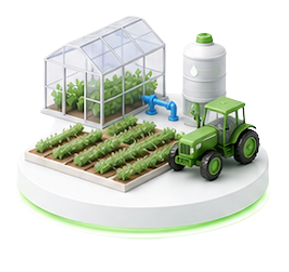
Agriculture and Farming
Smart Agriculture & Precision Farming Solutions
-
Precision Irrigation & Mainline Pressure Monitoring: Real-time tracking of line pressure and dynamic hydraulic balance across main supply lines, sub-mains, and drip/pivot irrigation networks.
-
Livestock Water Storage & Trough Level Detection: Continuous level sensing across remote water storage tanks, stock dams, automated watering troughs, and liquid fertilizer storage.
-
Volumetric Irrigation Flow & Water Accounting: High-precision inline flow metering across pumping stations, boreholes, and distribution branches to optimize water allocation and energy usage.
-
Ultra-Low Power LPWAN & Satellite Wireless Sensing: Deploy-and-forget, long-range LoRaWAN, NB-IoT, and Direct-to-Satellite nodes engineered with multi-year battery life for maintenance-free operation across sprawling acreage.

Smart Agriculture & Precision Farming Management
Agricultural producers, farm managers, and agronomists serve as the foundational stewards of crop yield optimization, water conservation, and agricultural sustainability. Across broadacre crop fields, high-value orchards, commercial vineyards, livestock stations, and controlled-environment greenhouses, farm managers oversee a critical portfolio of fluid, hydraulic, and environmental infrastructure: irrigation mainlines, remote water storage tanks, livestock watering troughs, fertilizer dosing loops, groundwater boreholes, and farm fuel reserves. Historically, farm management relied on reactive equipment checks, time-consuming manual site visits, and scheduled routine maintenance. Today, progressive agricultural enterprises are adopting "Smart Farming" and AgTech 4.0 frameworks, integrating remote physical assets with long-range LPWAN edge sensing (LoRaWAN, NB-IoT/CAT-M1), low-power telemetry, and centralized cloud analytics.
Within this framework, broad-scale hydraulic, water resource, and environmental monitoring represents a critical operational priority. Distributed farm infrastructure—from remote paddock stock troughs and borehole pumps to miles of buried irrigation pipe and liquid fertilizer tanks—is spread across vast, isolated rural acres. Modern low-power wireless sensing bridges this visibility gap. By deploying ruggedized, battery-powered Ellenex sensors dedicated strictly to measuring Level, Pressure, Flow, Water Quality, and Temperature, agricultural teams transform static, unmonitored farm assets into dynamic, data-driven environments that proactively prevent crop stress, protect livestock, eliminate water loss, and optimize operational budgets.
The modern smart agriculture concept addresses the complete, interconnected ecosystem of farm water management, precision irrigation, livestock welfare, and environmental stewardship. Rather than treating irrigation delivery, stock watering, fertilizer storage, and farm fuel management as isolated field operations, modern farm management evaluates them as an integrated continuous ecosystem:
-
Precision Irrigation Pipeline & Mainline Pressure Surveillance: Continuous static and dynamic line pressure tracking across primary irrigation mains, sub-mains, center pivots, and drip tape networks using low-power Ellenex pressure sensors. High-frequency pressure sensing detects dynamic shockwaves (water hammer) caused by fast-closing solenoid valves, while pinpointing line pressure drops. Detecting pressure fluctuations early prevents blown drip emitters, identifies underground pipe fractures, and ensures uniform water application across distant crop zones.
-
Livestock Water Storage, Dam & Trough Level Detection: Continuous water level and rate-of-fall tracking across remote water storage tanks, stock dams, automated watering troughs, and liquid fertilizer bladders using Ellenex high-precision submersible hydrostatic level transmitters and non-contact radar sensors. Real-time level telemetry detects sudden water loss from broken float valves or pipe tears. This triggers automated early alerts to farm managers, allowing proactive repairs and preventing stock dehydration and costly livestock losses in isolated paddocks.
-
Volumetric Irrigation Flow & Borehole Water Accounting: Precision volumetric flow rate and cumulative total tracking across agricultural pumping stations, groundwater boreholes, center pivots, and field distribution branches using Ellenex inline and non-intrusive flowmeters. Continuous flow monitoring verifies pump delivery rates, tracks volumetric water abstraction for water rights compliance, and flags pump wear or pipe restrictions. By pairing flow metrics with electrical pump draw, growers optimize variable speed drive (VFD) pump operations, eliminating dry-running and cutting electricity and diesel costs.
-
Open Water Quality, Runoff & Farm Dam Surveillance: Continuous inline measurement of water quality parameters (pH, Electrical Conductivity/Salinity, Turbidity, and Dissolved Oxygen) alongside dynamic water temperature across farm dams, irrigation supply channels, and runoff outlets using Ellenex industrial water quality probes. Real-time water quality tracking alerts growers to high salinity levels, chemical runoff, or low oxygen before pumping water onto sensitive crops or supplying it to livestock, protecting crop health and fulfilling environmental protection mandates.
-
Farm Diesel Fuel, Chemical & Liquid Fertilizer Tank Inventory Management: Precision level, pressure, and temperature monitoring across bulk diesel fuel storage, liquid fertilizer tanks (UAN), pesticide mixing vats, and farm generator reserves using Ellenex hydrostatic level sensors and temperature probes. Automated, real-time volume tracking eliminates hazardous manual dipstick inspections, automates fuel delivery logistics, prevents fuel starvation during critical harvest periods, and flags unexpected fuel theft or chemical loss in bulk storage.
-
Groundwater Borehole & Soil Hydrology Water Table Management: Monitoring groundwater piezometric levels, water table drawdowns, and thermal profiles in rural boreholes and irrigation wells using specialized Ellenex pressure and level nodes. Continuous hydrological tracking provides farm managers with real-time data on aquifer recharge rates and seasonal drawdown, ensuring sustainable groundwater extraction and preventing pump damage from dropping water tables.
Core Advantages of Smart Agriculture & Precision Farming Management
Upgrading agricultural operations with specialized Ellenex LPWAN sensing focused on level, pressure, flow, water quality, and temperature delivers clear operational, financial, and safety benefits for growers, farm managers, and pastoralists:
-
Enhanced Livestock Welfare and Elimination of Stock Water Failures: In large pastoral operations, checking remote stock water troughs requires hours of daily driving over rough terrain. Permanent Ellenex level sensors continuously monitor trough and tank levels, sending instant alerts if water levels drop below critical thresholds due to pipe tears or stuck float valves. Ensuring continuous stock water access prevents animal distress, weight loss, and livestock mortality while saving hundreds of hours in manual paddock checks.
-
Prevention of Crop Stress and Maximized Yield Uniformity: Irregular water delivery caused by pressure drops or pipe blockages leads to uneven crop growth and reduced harvest yields. Continuous line pressure and flow monitoring across drip lines and pivot systems ensures every acre receives exact designed water application. Early detection of pressure loss or line tears prevents crop water stress during critical growth stages, maximizing crop quality and total yield per acre.
-
Substantial Water Conservation and Reduced Non-Revenue Losses: Agricultural water is a scarce and expensive resource. Permanent Ellenex pressure loggers and flowmeters continuously monitor system mass balances across long rural supply lines. By logging overnight low-flow baselines and tracking unexpected pressure drops, the system detects underground pipe fractures, blown fittings, and stuck-open valves in real time, preventing millions of gallons of water loss.
-
Lower Energy Expenditures and Optimized Pumping Efficiency: Irrigation pumping accounts for one of the largest energy expenses in farming. Continuous monitoring of line pressure, dynamic fluid flow, and pump delivery rates ensures pumps operate strictly at peak efficiency. Identifying issues like clogged intake strainers or pipe friction early reduces kilowatt-hour consumption and diesel usage, delivering immediate 10% to 20% reductions in monthly farm energy bills.
-
Automated Regulatory Compliance and Audit-Grade Reporting: Agricultural enterprises face strict regulatory oversight regarding groundwater extraction quotas, farm dam storage limits, and environmental runoff quality. Ellenex water quality, level, and flow sensors automate continuous environmental logging, generating tamper-proof cloud data records that satisfy water authority audits, eliminate manual reporting errors, and protect farm owners from regulatory fines.
-
Optimized Farm Logistics and Reduced Fleet Fuel Costs: Managing remote fuel supplies, fertilizer reserves, and water tanks across thousands of acres requires tight logistical control. Ellenex level sensors deliver real-time inventory visibility across all bulk storage assets. Farm managers can optimize diesel delivery dispatches, eliminate unexpected generator shutdowns during harvest, and cut farm vehicle fuel costs by eliminating manual inspection rounds.
-
Ruggedized, Multi-Year Maintenance-Free LPWAN: Sprawling farmland and remote pastoral stations lack local electrical grid power and traditional cellular or Wi-Fi coverage. Purpose-built Ellenex LPWAN nodes (utilizing LoRaWAN, NB-IoT/CAT-M1) deliver long-range wireless data transmission directly from isolated paddocks or remote bores. Featuring ultra-low-power electronics housed in IP68-rated, weather-proof enclosures, these battery-operated sensors function maintenance-free for up to 5 to 10 years without external power.
-
Substantial Financial ROI and Rapid Capital Payback: Deploying low-power wireless sensors across irrigation mains, stock troughs, and fuel tanks yields full capital payback within 3 to 12 months by preventing crop loss, eliminating livestock deaths from water failure, and drastically cutting farm vehicle fuel and labor costs. Protecting a single high-value crop block from drought stress or preventing a single major mainline rupture delivers immediate financial savings that directly protect farm profit margins. Learn More
Find the Right Monitoring Solution for Your Application
Every industrial site operates under unique constraints—whether you are managing remote water infrastructure, protecting critical equipment, or automating environmental compliance. Ellenex simplifies IoT deployment by offering pre-engineered, battery-powered monitoring solutions configured for your specific operational needs.
To help you quickly find the exact setup for your project, explore our solution portfolio through two distinct lenses:
Solutions by Asset Performance
Deploying Industrial IoT is not just about mounting hardware—it is about maximizing the value, reliability, and lifespan of your physical infrastructure. Our Asset Performance solutions are designed to address the core operational challenges faced by site managers, reliability engineers, and enterprise leaders. By combining battery-powered LPWAN sensors (NB-IoT / LTE Cat-M1 and LoRaWAN) with real-time telemetry on the Ellenex Platform, we turn raw equipment data into actionable operational intelligence.


Solutions by Sensor Type
While asset performance focuses on the health and lifespan of your physical infrastructure, Solutions by Operational Purpose targets your core business and operational objectives. Every industrial facility operates with specific targets—whether that means eliminating manual inventory audits, cutting carbon emissions, preventing environmental contamination, or automating workflows.


Level Monitoring Solutions


Pressure Monitoring Solutions


Frequently Asked Questions
How do wireless pressure sensors optimize precision irrigation and prevent pipeline ruptures across large farms?
Large-scale drip, micro-spray, and center pivot irrigation systems rely on consistent hydraulic pressure to ensure uniform water delivery across broadacre crops and orchards. Fast-closing solenoid valves, pump startups, or trapped air pockets cause dynamic transient pressure shockwaves (water hammer) that fatigue pipe fittings, burst drip lines, and damage costly pumping infrastructure. Conversely, undetected pressure drops caused by underground line ruptures or pump priming failures leave entire field sectors under-irrigated, leading to severe crop stress and lost yields.
Ellenex addresses irrigation pressure management through industrial low-power wireless pressure sensors (PTS2, PTD2, and high-pressure PTS3 series) installed across pump discharge manifolds, filtration banks, mainlines, and sub-mains. Powered by internal batteries, these IP68-rated nodes sample static line pressure and dynamic pressure fluctuations, transmitting time-stamped telemetry via LoRaWAN, NB-IoT, or Direct-to-Satellite networks. Field managers receive instant alerts when pressure deviates from optimal operating bands, enabling rapid isolation of pipe fractures, protection of variable speed drive (VFD) pumps from cavitation, and verified water distribution across every paddock.
Why is automated level monitoring critical for remote stock water tanks, dams, and livestock troughs?
Maintaining uninterrupted stock water supply across sprawling pastoral stations and livestock properties is vital for animal welfare, weight maintenance, and herd survival. Traditional stock water management requires farm personnel to drive hundreds of miles weekly over rough terrain to conduct manual visual checks on isolated water tanks, dams, and troughs. When a float valve breaks, a pipe ruptures, or a stock pump fails during extreme heat, livestock can suffer severe dehydration within hours before manual inspections detect the failure.
Ellenex eliminates stock water vulnerability by deploying rugged, battery-operated level transmitters—including submersible hydrostatic level sensors (PLS2 series) and non-contact radar distance loggers (DRC3)—across remote tanks, stock dams, and watering troughs. These long-range LPWAN nodes continuously track water depth and rate-of-fall metrics without requiring local electrical infrastructure. Automated cloud notifications instantly alert graziers to sudden water level drops or empty troughs, allowing immediate maintenance dispatch, protecting herd welfare, and eliminating hundreds of hours of manual vehicle inspection rounds.
How do inline flowmeters and water quality probes assist with water rights compliance and fertigation accuracy?
Agricultural producers face increasing regulatory oversight regarding annual groundwater extraction limits, river abstraction quotas, and environmental runoff management. Additionally, modern precision farming relies on fertigation—injecting liquid fertilizers directly into irrigation lines—where precise volumetric flow rates and solution concentration metrics determine nutrient uptake and prevent root burn or chemical runoff into local waterways.
Ellenex supports water accounting and fertigation control by pairing non-intrusive and inline flowmeters (FMS2 series) with industrial water quality sensors (CPH2 for pH, CSD2 for Electrical Conductivity/Salinity, and CTR2 for Turbidity). Installed at groundwater boreholes, river pump stations, and fertigation injection loops, these LPWAN devices continuously measure totalized volumetric flow, inline solution pH, and electrical conductivity. Real-time data logging generates tamper-proof compliance records for water regulatory audits while ensuring optimal fertilizer dosing concentration to maximize crop nutrient absorption and protect soil health.
How do smart level and temperature sensors prevent fuel starvation and safeguard bulk agricultural chemicals?
Harvesting operations, heavy tillage, and continuous irrigation pumping require large reserves of diesel fuel, hydraulic oil, and bulk liquid fertilizers (such as UAN) stored in farm tank farms and mobile field bladders. Unexpectedly running out of fuel during critical harvest windows or pump runs causes severe operational downtime, while manual dipstick measurements on elevated storage tanks expose farm workers to toxic chemical vapors and fall hazards.
Ellenex automates bulk storage logistics by equipping farm fuel tanks, liquid fertilizer bladders, and pesticide vats with submersible hydrostatic level sensors (PLC2), radar distance sensors, and industrial temperature probes (TTS2). Housed in weather-proof enclosures, these LPWAN nodes track product inventory and dynamic fluid temperatures around the clock without grid power. Farm managers receive automated low-level replenishment alerts, enabling optimized fuel delivery dispatches, preventing fuel starvation on remote generator pumps, eliminating dangerous manual dipstick inspections, and flagging unrecorded fuel draw or tank leaks instantly.
How does continuous groundwater borehole and piezometric level monitoring support long-term water sustainability?
Irrigated agriculture heavily depends on deep groundwater aquifers, where seasonal drawdowns and falling water tables directly impact pump efficiency and long-term farm viability. Running deep borehole pumps when water levels drop below pump intake depths causes severe dry-running damage, expensive pump replacements, and unexpected irrigation outages. Furthermore, excessive local pumping can draw saline water into fresh aquifers, permanently damaging crop soil structure.
Ellenex addresses groundwater management with specialized small-diameter submersible level and piezometric pressure transmitters (PLS2, PTS2 series) lowered directly into groundwater wells and monitoring boreholes. These ultra-low-power nodes continuously record piezometric head, aquifer drawdown rates, and water temperature profiles, transmitting data over LPWAN networks. Irrigation managers use this telemetry to monitor seasonal water table recharge, set automated pump cut-off thresholds before dry-running occurs, prevent saline intrusion, and manage long-term groundwater extraction sustainably.
What makes Ellenex LPWAN IoT sensors uniquely designed for broadacre farmland and remote pastoral properties?
Deploying digital AgTech solutions across thousands of acres presents severe connectivity and power challenges, as distant paddocks, river valleys, and remote pastoral stations completely lack cellular coverage, Wi-Fi networks, and electrical grid power. Farmers require ruggedized, self-contained sensor hardware that can be installed quickly across exposed outdoor environments without ongoing maintenance or frequent battery changes.
Ellenex engineers its entire agricultural sensor line around ultra-low-power, long-range wireless connectivity, supporting LoRaWAN, NB-IoT, LTE Cat-M1.. Powered by internal high-capacity industrial batteries, these IP68-rated, UV-resistant devices operate maintenance-free for up to 5 to 10 years without external solar panels or wiring. Their plug-and-play architecture allows growers and graziers to easily retrofit remote stock tanks, buried irrigation lines, and paddock boreholes, delivering reliable telemetry from the most isolated agricultural regions on earth.
TECHNICAL CENTRE
Ellenex Cellular NB IoT and LTE-M Cat M1 Products
Product & Technical Questions? Contact Us
Other Ellenex Products? Find them here