

LPWAN SOLUTIONS
River and Waterway Turbidity Monitoring
Elevating water quality control through advanced turbidity tracking for rivers and waterways
Improving waterway management with near real-time data
Ensuring reliable and efficient monitoring with IoT technology
Addressing water quality issues proactively with battery-operated turbidity sensors


Solution
The River and Waterway Turbidity Monitoring Solution provides near-real-time total suspended solids (TSS) tracking, nephelometric turbidity units (NTU), sediment load estimation, water clarity metrics, and pollution event alerts for natural rivers, streams, catchments, and urban waterways without the expense or complexity of traditional wired telemetry. Engineered for continuous outdoor field deployment in raw surface water, the system arrives fully pre-configured out of the box to automatically stream encrypted sensor telemetry directly to the Ellenex Software Platform.
This IoT-driven surface water quality solution offers key operational benefits:
Zero-Touch Plug-and-Play Setup: Shipped fully pre-programmed for immediate field deployment in under 5 minutes without requiring local software setup, driver downloads, or manual developer provisioning.
Flexible Dual LPWAN Wireless Protocols: Choice of LoRaWAN (ideal for private catchment networks or remote environmental reserves with zero ongoing airtime fees) or NB-IoT / LTE-M (for direct-to-tower public cellular connectivity across spread-out municipal river networks).
Optical Nephelometric Precision: Utilizes a 90-degree infrared light scatter method compliant with ISO 7027 standards to deliver precise turbidity and Total Suspended Solids (TSS in mg/L) measurements with integrated temperature compensation.
Heavy-Duty Submersible Construction: Built with an IP68-rated submersible, corrosion-resistant optical sensor head paired with an IP68 UV-stabilized transmitter enclosure engineered for harsh surface water environments.
Low Total Cost of Ownership: Powered by an internal replaceable 3.6V Lithium battery combined with ultra-low-power firmware management to achieve maintenance-free operational lifespans of up to 10 years.
Rapid Operational ROI: Accelerates financial returns by tracking sediment plumes early, enforcing dredging compliance, eliminating routine manual water grab sampling, and simplifying environmental reporting. Learn More

Easy Install

Pre-Configured

Secure

Quick ROI

Rugged Design

Battery Operated
Our Remote River and Waterway Turbidity Monitoring Solution provides a comprehensive approach to efficient water quality management and watershed protection. By leveraging cutting-edge technology in optical nephelometric sensors and long-range wireless telemetry, environmental agencies, mining operators, and municipal water authorities can track, control, and optimize water quality monitoring in real time. The result is a future-proof solution that not only addresses current operational challenges—detecting sudden sediment runoff spikes and tracking agricultural or industrial discharge—but also adapts to the changing demands of environmental compliance, ultimately protecting natural aquatic habitats, public health, and water security.
Connecting river reaches, agricultural drainage basins, and municipal stormwater channels to a central digital network transforms static surface water catchments into an intelligent environmental monitoring network. By streaming continuous optical turbidity telemetry directly to a cloud dashboard, environmental officers gain complete visibility over watershed clarity and siltation dynamics.
Resource Sustainability
Continuous optical turbidity tracking directly protects river ecosystem health by detecting soil erosion, construction runoff, and heavy sediment plumes before light penetration is blocked. Monitoring live NTU and TSS levels allows environmental authorities to safeguard benthic habitats, protect fish spawning grounds from siltation, and optimize raw intake filtering at drinking water facilities. Automating remote water sampling cuts down routine field inspection vehicle trips, saving fuel and reducing carbon emissions.
Compliance Assurance
Automated continuous logging from IP68 optical nephelometric sensors creates an unalterable, audit-ready digital ledger of water clarity, total suspended solids, and water temperature. Replacing periodic manual grab-sampling with automated telemetry delivered straight to the Ellenex Software Platform enables civil construction projects, mining sites, and municipal utilities to effortlessly prove compliance with environmental protection discharge permits, EPA sediment thresholds, and dredging activity regulations.
Battery-Powered River And Waterway Turbidity Monitoring With LoRaWAN® Or NB-IoT / LTE-M Connectivity For Environmental And Municipal Networks.
Core Operational Capabilities
Optical Nephelometric Turbidity Sensor (90° Infrared Light Scatter Method)
LoRaWAN / NB-IoT / LTE-M
IP68 Submersible Sensor
IP66 UV-Protected Enclosure
Up to 10-Year Battery Life
Cloud / API / SCADA Integration

Optimizing River and Waterway Turbidity Monitoring with Ellenex Turbidity Sensors
WQ-RR-TR

Effective water quality monitoring is not just about preserving our environment – it's about safeguarding the health of our communities and future generations.
Industrial Outdoor LoRaWAN Gateway Specifications
For customers deploying the LoRaWAN package, the high-performance industrial gateway provides complete self-managed coverage. It is pre-configured to forward packet data to the Ellenex Platform.


System Architecture
The integrated Solution telemetry platform is designed around a dual-LPWAN (Low Power Wide Area Network) hardware architecture, giving operators the flexibility to deploy either LoRaWAN or cellular-based (supporting NB-IoT and LTE Cat M1) network configurations depending on local infrastructure and regional topology. Both communication technologies represent the cutting edge of industrial IoT, designed to penetrate challenging physical barriers and achieve multi-kilo meter propagation distances while maintaining extremely low electrical current draws.
The Ellenex telemetry pipeline follows a streamlined 4-step end-to-end data flow designed to give customers total choice over their network infrastructure and software platform:
-
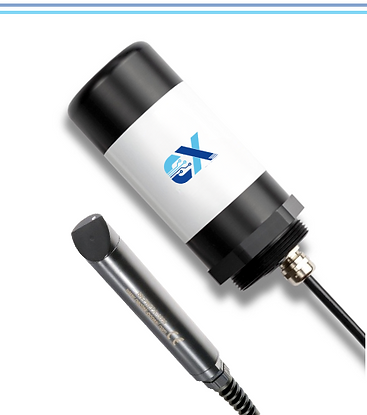
Sensor: The single Ellenex battery-powered field device directly measures physical parameters, digitizes analog signals, applies factory calibration parameters, packages telemetry into AES-128 encrypted payloads, and manages low-power sleep modes within a unified unit. Learn More:
-
Wireless Infrastructure Options:
-
Option A (LoRaWAN Option): Transmits sub-GHz radio packets to an Ellenex Pre-Configured Outdoor Gateway. The gateway acts as a transparent Layer-1/Layer-2 RF-to-IP bridge. Learn More
-
Option B (Cellular NB-IoT / LTE-M Option): Transmits encrypted telemetry directly across licensed 3GPP cellular networks to public mobile base station towers. Learn More.
-
_edited.png)
3. Network Core & Data Routing Layer: Encrypted sub-GHz packets are securely routed from the gateway to the Ellenex Network Server (LNS). The LNS manages crucial network functions—including device authentication, payload decryption, and frame deduplication—ensuring clean, secure sensor data is seamlessly delivered to Ellenex Software Platform.
4. Data Processing & Platform Visualization: All telemetry is ingested, decoded, and visualized seamlessly within the Ellenex Cloud Software Platform. The software transforms raw sensor data into actionable insights through real-time dashboards, historical trend analysis, threshold alerting, and device health management.

Connectivity & Visualisation Platform

With its advanced features and ease of use, Ellenex’s software platform enables effective monitoring and management of remote operations—ensuring efficient, sustainable, and reliable resource management.
-
Encrypted ultra-low power communication protocol.
-
Advanced device inventory.
-
Integration of APIs for enterprise systems.
-
Multi-tenant role-based access control.
-
Data export and import.
-
White-label platform for enterprise runs on private accounts.
-
Variable alarm setting for high and low thresholds and multi-channel alerting.
-
Sampling and transmission interval configuration.
-
Transmission condition configuration.
-
Other configurations and customizations available on request.
Ellenex's software platform is a comprehensive, user-friendly solution specifically designed for remote monitoring and management.
The platform offers a robust range of features tailored for off grid, distributed, and critical operations, including:
-
Real-Time Data Visualization: Monitor live operational status, levels, and key metrics across all your locations from a centralized dashboard.
-
Customizable Alerts & Notifications: Receive instant warnings for threshold breaches, sudden drops, or anomalous activity before minor issues become costly failures.
-
Historical Data Analysis & Predictive Analytics: Track consumption patterns, analyze usage trends, and forecast future demand to optimize maintenance and supply schedules.
-
Seamless System & API Integration: Easily feed raw or aggregated telemetry into your existing enterprise software, SCADA, or ERP systems using Ellenex’s secure Open API.
Key Benefits
Ellenex Software Platform Dashboard
Individual Device Details & Data Analytics View
Parameter Configuration and GPS Location View
Device Management Interface
Historical Data & Performance Analytics
Remote Command and Downlink Control Log


Ellenex Asset Monitoring App
Custom alert and Notification Setup Interface
Data Export and Reporting Interface
Webhook and Data Forwarding Interface
Sensor Calibration and Formula Configuration
Integration Options
A core competitive advantage of the solution is its complete pre-configured, plug-and-play design. Both the cellular and LoRaWAN (with local gateway) variants arrive fully configured and ready for connection to the Ellenex platform out of the box, eliminating the complexities of local software setup, sensor programming, or manual network registration.
The end-to-end package includes the following integration characteristics:
-
Zero Technical Hassles: No extra power tools, driver setup, or developer configurations are required. Deployment is completed in under 5 minutes.
-
Pre-Configured Gateway Provisioning: The industrial outdoor gateway is pre-commissioned to automatically bind with the Ellenex LNS stack. Once powered via PoE or DC, it immediately discovers sensors, decrypts the payloads, and relays them directly to the centralized cloud dashboard, seamlessly routing data to the Ellenex Platform.
-
Pre-Configured SIM & Connectivity: For NB-IoT deployments, the transmitter is shipped with a pre-configured 4FF Nano-SIM card and active carrier subscription, ready to transmit on regional networks immediately upon power-up.
-
Unified Fleet Visualization: Once powered on, both device variants automatically check in and populate their respective live measurement streams to the user’s centralized mobile app or web dashboard.
Frequently Asked Questions
How does the 90-degree infrared light scattering method evaluate suspended sediment loads in natural water bodies?
The optical probe directs an infrared beam into the surrounding water. Suspended particles reflect this light, and a photodetector positioned at 90 degrees measures the scattered intensity according to ISO 7027 standards. The internal electronics convert this optical signal into Nephelometric Turbidity Units (NTU/FNU) and calculate Total Suspended Solids (TSS in mg/L) before transmitting encrypted records to the Ellenex Software Platform.
What field placement techniques protect the optical lens from biological fouling and sediment buildup in slow-moving streams?
Technicians secure the IP68 submersible probe inside an angled protective stilling tube or perforated guard attached to a bridge pier or riverbank post. Positioning the lens parallel to the water flow enables natural currents to continuously sweep across the smooth optical window, preventing silt accumulation and bio-film adhesion.
How does the sensor eliminate measurement drift caused by ambient sunlight in shallow or clear river channels?
The nephelometric optical system uses modulated infrared light outside the visible spectrum. The internal optical receiver isolates the modulated infrared signal and filters out background daylight, ensuring accurate water clarity measurements regardless of solar intensity or water depth.
In what manner does the Ellenex Software Platform dispatch instant notifications when site runoff crosses environmental turbidity limits?
System operators establish dynamic upper NTU or TSS alert boundaries within the platform. If construction site runoff, dredging, or storm events cause water turbidity to breach set limits, the platform immediately issues automated warnings via SMS, email, or mobile app push notifications to trigger immediate containment measures.
What determines whether to deploy LoRaWAN or Cellular LPWAN connectivity for waterway monitoring?
The LoRaWAN variant (-L) is designed for isolated river catchments or private industrial lands where an Ellenex Outdoor Gateway provides localized coverage with zero recurring SIM data fees. The Cellular LPWAN variant (-N) connects directly to public mobile phone towers via NB-IoT/LTE-M, making it optimal for spread-out municipal monitoring points without deploying local gateways.
How do field technicians verify calibration accuracy for the optical turbidity probe over extended deployments?
Calibration verification is performed using standard Formazin reference fluids. Field crews use the calibration interface in the Ellenex Software Platform to input multi-point offset values during routine maintenance, maintaining measurement accuracy across the probe's operational lifecycle.
What routine maintenance keeps the optical turbidity sensor performing reliably over multi-year field operations?
The monitoring unit functions autonomously using an internal 3.6V primary Lithium battery (LiSOCl2) and low-power firmware management. Physical servicing is limited to periodic field checks where technicians wipe the optical glass face with a soft cloth to remove algae or mud coatings. Operating on standard reporting schedules, the internal battery supports up to 10 years of continuous operation
Do you want to discuss your application?
Contact us for a customized applications
Please fill out the form to set consultation session with our team and discuss your application.

