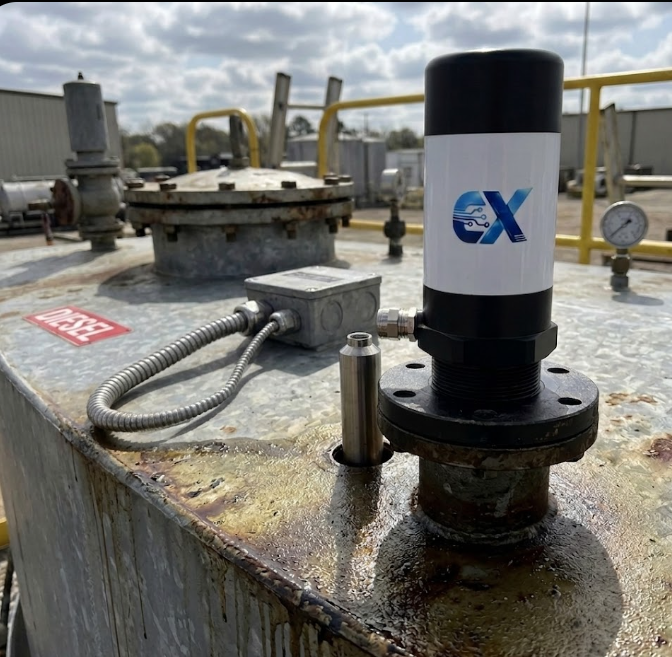
Innovative solution for Diesel Generator Monitoring

The modern industrial landscape is currently undergoing a structural transformation characterized by the rapid adoption of decentralized power systems and the digitalization of logistical frameworks. Central to this evolution is the management of diesel fuel assets, which serve as the lifeblood for mission-critical infrastructure in sectors ranging from telecommunications and mining to large-scale agriculture and remote healthcare. As global industries move toward the integrated models of Industry 4.0, the traditional methodologies of fuel inventory management—reliant on manual inspection, mechanical gauges, and reactive refilling—are being systematically replaced by high-precision Industrial Internet of Things (IIoT) ecosystems.

The integration of advanced pressure sensors, specifically the Ellenex PTS2 and PTS3 series, represents a pivotal advancement in this domain. These devices facilitate a transition from estimated inventory tracking to granular, real-time data acquisition, allowing organizations to achieve unprecedented levels of operational efficiency and resource optimization. In remote environments, such as distributed vineyard operations, the challenges of monitoring multiple, geographically scattered generators are compounded by physical constraints, such as small tank dimensions and lack of cellular network proximity. The deployment of sensitive pressure transmitters at the tank outlet, rather than relying on traditional immersion probes, has emerged as a particularly innovative solution to these architectural hurdles.
Technical Architecture of the Ellenex Pressure(PTS2 and PTS3) Sensing Systems
The PTS2 and PTS3 series are engineered as low-power, standard pressure transmitters designed for the rigorous monitoring of liquid and gas media compatible with stainless steel, including water, air, diesel, and industrial oils. These devices are not merely sensors but integrated measurement and communication nodes that utilize Narrowband Internet of Things (NB-IoT) and LTE Cat-M1 protocols to bridge the gap between remote hardware and centralized cloud platforms.
Mechanical Design and Diaphragm Metallurgy
The structural integrity of the PTS2 and PTS3 sensors is derived from the use of high-grade materials that ensure long-term durability in harsh environments. The sensor body is typically constructed from SS304 stainless steel, while the sensing diaphragm—the most critical component for precision—is manufactured from SS316L stainless steel. This choice of metallurgy is essential for diesel monitoring, as SS316L offers superior resistance to the corrosive properties of various fuel additives and environmental contaminants.
The PTS2 series is designed with an IP66 rating, providing robust protection against high-pressure water jets and heavy dust ingress, making it suitable for most outdoor industrial applications. In contrast, the PTS3 series is rated at IP68, indicating that the device is fully sealed and capable of continuous submersion in liquid. This distinction is critical for installations in flood-prone areas or underground assets where environmental sealing is a non-negotiable requirement.
Physical and Electrical Specifications of PTS2/PTS3 Series
Parameter | Specification | Industrial Context |
Sensing Range | 0.3 to 1000 bar (Selectable) | Enables monitoring of both shallow tanks and high-pressure lines |
Accuracy (Typical) | ± 0.25% of Full Span | Essential for precise volume calculation in small vessels |
Resolution | ±0.01% Span | Allows for the detection of minor leaks or consumption changes |
Materials (Body/Diaphragm) | SS304 / SS316L | High chemical compatibility with diesel and hydraulic fluids |
Operating Temperature | -10°C to +70°C | Operates reliably across diverse global climates |
Power Supply | Built-in Replaceable 3.6V Lithium Battery | Eliminates the need for expensive trenching or wiring |
Battery Longevity | 6,000 transmission for NBIOT and 10,000+ transmissions for LoRaWAN | Typically exceeds 10 years in standard operation |
Weight | 550 grams | Facilitates easy installation on standard tank outlets |
Integrated Solution Ecosystem
This project is powered by two of our specialized industrial frameworks:
Remote Diesel Tank Level Monitoring: This solution provides near real-time visibility into fuel levels across distributed assets. By using pressure-based data, users receive automated alerts via SMS or email when fuel hits critical thresholds, eliminating the risk of dry tanks and engine damage.
Diesel Delivery Management System: This framework optimizes the entire supply chain. By integrating real-time pressure data from destination tanks, fuel suppliers can plan delivery routes based on actual need, ensuring on-time delivery and reducing unnecessary trips.
How Ellenex Pressure Sensor helps Diesel Generator Monitoring?
The innovative solution of connecting a sensitive pressure sensor like the PTS2 to the tank outlet port bypasses these constraints. This approach treats the entire tank as a single column of pressure. By measuring the pressure at the outlet, the sensor captures the weight of the fuel from the very bottom to the very top, providing a full measurement range without the need for internal access or overhead space. This method also reduces the risk of sensor contamination and simplifies maintenance, as the sensor can be serviced or replaced without opening the tank's main access ports. For remote diesel generators, physical installation space is often the deciding factor. Pressure transmitters mounted at the outlet port offer several technical advantages:
Small Tank Geometry: Traditional internal sensors require significant vertical height to function. A pressure transmitter at the outlet port treats the entire tank as a single column of pressure, making it ideal for compact, base-integrated tanks.
Vapor and Foam Immunity: Non-contact sensors often fail due to surface foam or fuel vapors. Pressure sensors measure the weight-force of the liquid directly, making them immune to surface turbulence or condensation.
Vented Gauge Design: Ellenex Pressure sensors often utilize a vented gauge design with a capillary tube to compensate for atmospheric pressure changes, ensuring that the level reading represents only the true weight of the fuel.
High Pressure Durability: The Pressure sensor(PT series) can handle pressure overloads of up to 300% (for ranges <1bar) and have a lifespan of over 10 million cycles, ensuring they survive the vibrations and startup surges of large generators.
Bridging the Connectivity Gap: LoRaWAN and Cellular IoT
Despite the vineyard's distance from cellular towers, we ensured reliable data transmission by utilizing custom high-gain external antennas and versatile network options. These sensors support multiple LPWAN (Low Power Wide Area Network) technologies:
LoRaWAN: An open, unlicensed model that empowers users to build private, low-cost networks in remote areas. LoRaWAN is particularly effective for battery longevity and autonomy in regions where cellular coverage is non-existent.
NB-IoT and LTE Cat-M1: Cellular-based protocols that offer superior signal penetration and ultra-low power consumption, allowing the devices to operate for over 10 years on a single battery.
LoRaWAN Autonomy: Provides an open model for building private networks, which is essential for remote vineyards where public cellular signals may be weak or unavailable.
Deep Penetration: Both NB-IoT and LoRaWAN provide deep coverage, allowing sensors to communicate from inside generator housings or remote valley locations.
Security: Data is transmitted via encrypted protocols, ensuring the security of critical industrial fuel assets.
The Ellenex Software Platform: Data Visualization and Actionable Insights
The value of the Pressure(PTS2 and PTS3) sensors is unlocked through the Ellenex cloud platform, which serves as the central intelligence hub for the monitoring system. The platform is designed to be highly scalable, supporting thousands of sensors across multiple geographic locations.
Key Platform Functionalities
Near Real-Time Visualization: The dashboard provides single-shot data visualization, allowing operators to see the current status of every generator at a glance.
Volume and Consumption Prediction: Using historical data, the platform calculates daily, weekly, and monthly consumption trends. This information is vital for budgeting and identifying inefficiencies in generator performance.
Threshold-Based Alerting: Users can configure multi-level alarms (e.g., Low, Critical Low, Refilled). These alerts are transmitted via SMS, email, or push notifications to ensure that field personnel can take immediate action.
API and Enterprise Integration: The platform offers robust APIs for integration with existing Enterprise Resource Planning (ERP) or Building Management Systems (BMS), enabling a unified view of industrial operations.

Economic Analysis: ROI, Resource Optimization, and Sustainability
The implementation of an IIoT monitoring solution like the one deployed by Ellenex in the vineyard provides measurable financial and environmental benefits for diesel generator monitoring. These advantages often outweigh the initial hardware and deployment costs within the first year of operation.
Manpower and Resource Savings
In the vineyard scenario, the client previously relied on manual checks of multiple generator tanks. This required field personnel to travel across rugged terrain to physically inspect each tank, a process that is both time-consuming and labor-intensive. By switching to the Ellenex platform, the client could plan their routine based on actual data rather than a fixed schedule. This results in significant savings on manpower and fuel for service vehicles, while also reducing the risk of workplace accidents associated with manual tank inspections in hazardous conditions.
Environmental Impact and Compliance
Fuel leaks and spills present a major environmental risk and can lead to heavy regulatory fines. The high precision of the PTS2 sensor (± 0.25%) allows the system to detect even small drops in fuel level that might indicate a slow leak. Furthermore, the system helps organizations stay in compliance with environmental regulations by providing an automated, auditable trail of fuel usage and storage conditions.
Sustainability Metrics
CO2 Emission Reduction: By optimizing delivery routes and reducing the number of service trips, organizations can lower their carbon footprint.
Waste Prevention: Accurate monitoring prevents overfills and the resulting environmental contamination.
Resource Longevity: Preventing generators from running dry protects the fuel pumps and engine components from damage, extending the lifespan of the equipment.
Strategic Conclusions and Future Outlook
The evolution of fuel infrastructure management from manual oversight to automated, pressure-based telemetry marks a critical milestone in the journey toward industrial sustainability and efficiency. The vineyard case study demonstrates that even the most challenging physical and geographical constraints—such as small tank geometries and lack of network proximity—can be overcome through engineering innovation and the strategic application of IIoT technologies.
The Ellenex pressure sensor(PTS2 and PTS3 series) provide a robust, reliable, and high-precision hardware foundation for these solutions. By leveraging the physics of hydrostatic pressure and the wide-area coverage of NB-IoT and LTE Cat-M1, these sensors provide a level of visibility that transforms fuel from a "black box" resource into a data-driven asset. The integration of the Ellenex platform further enhances this value by providing the predictive analytics and proactive alerting necessary for modern operational excellence.
Looking forward, the expansion of low-power satellite connectivity and the increasing sophistication of machine learning algorithms for volume prediction will likely further enhance the capabilities of these systems. Organizations that embrace these technologies today are not only securing their immediate fuel needs but are also building the resilient, data-driven infrastructure required for the challenges of tomorrow's industrial landscape. The success of the vineyard deployment serves as a definitive proof-of-concept for the transformative power of precision sensing in remote environments, offering a clear roadmap for businesses looking to optimize their distributed assets on a global scale.
Frequently Asked Questions
Why is pressure sensing preferred over ultrasonic or float sensors for diesel generator tanks?
Pressure sensors, such as the PTS2 and PTS3 series, utilize the hydrostatic principle to measure the vertical weight of the fuel column. Unlike float sensors that rely on moving parts prone to mechanical wear or sticking due to debris, pressure transmitters are solid-state and highly durable. Furthermore, non-contact ultrasonic sensors are often affected by the surface foam and vapors common in diesel tanks, which can lead to "ghost" readings or signal loss.
By measuring at the tank's outlet port, pressure sensors avoid the "blind zones" at the top of the tank that typically limit the range of ultrasonic devices. This allows for a continuous, high-precision measurement ($ \pm 0.25% $ accuracy) from a completely full tank down to the very last drop, ensuring that compact or irregularly shaped generator base tanks are monitored with total visibility.
What are the primary differences between the PTS2 and PTS3 sensors for diesel applications?
The PTS2 is a standard industrial pressure transmitter rated at IP65/IP67, which provides robust protection against dust and high-pressure water jets. It is the ideal choice for stationary diesel generators located in typical outdoor or industrial environments where the device is exposed to rain and environmental particulates but is not at risk of being submerged.
The PTS3 is an upgraded version with an IP68 rating, specifically designed for full and continuous submersion. This makes the PTS3 the preferred solution for generators situated in flood-prone geographies or underground fuel storage pits where the sensor might be completely covered by water or fuel for extended periods during environmental events.
How does the "Vented Gauge" design ensure accuracy in varying weather conditions?
Because atmospheric pressure acts on the surface of the diesel in an open or vented tank, it must be accounted for to prevent reading errors. Ellenex pressure sensors utilize a "Vented Gauge" design, which includes a small capillary tube within the device cable to allow the back of the sensing diaphragm to "breathe". This physical connection automatically cancels out changes in barometric pressure caused by weather patterns or elevation shifts.
Without this atmospheric compensation, a significant change in local weather could cause the reported fuel level to drift by several inches, potentially triggering false low-level alarms or missing a critical shortage. By isolating the true hydrostatic pressure of the fuel, the sensor ensures that the reported data reflects only the actual weight and height of the diesel column above the outlet.
How does pressure monitoring facilitate more efficient diesel delivery and logistics?
Remote pressure monitoring transforms fuel management from a reactive "on-call" task to a predictive, data-driven operation. The integrated platform uses near real-time data to calculate current consumption rates and forecast exactly when a generator will reach its refill threshold. This allows fleet managers to schedule deliveries proactively, eliminating "dry tank" emergencies and the high costs associated with last-minute refueling trips.
Integrating these sensors into a broader delivery management system also allows for route optimization. By having a holistic view of the fuel levels across all scattered assets, suppliers can plan more efficient delivery loops that reduce vehicle mileage, labor hours, and carbon emissions. This ensures that every generator is replenished on time while maximizing the operational efficiency of the delivery fleet.
Can these pressure sensors be deployed in remote areas without a standard cellular network?
Yes, these sensors are purpose-built for remote infrastructure using Low Power Wide Area Networks (LPWAN) such as LoRaWAN and NB-IoT. These technologies are designed for deep signal penetration, which allows the sensors to transmit data successfully even when located inside metal generator housings or in remote valleys where standard mobile phone signals often fail.
In areas completely outside of public network reach, LoRaWAN provides the flexibility to establish a private, low-cost network using high-gain antennas to bridge the gap to a centralized hub. Because these protocols are extremely energy-efficient, the battery-operated PTS2 and PTS3 sensors can provide accurate monitoring for over 10 years without needing a battery change, making them an ideal "set-and-forget" solution for remote assets.