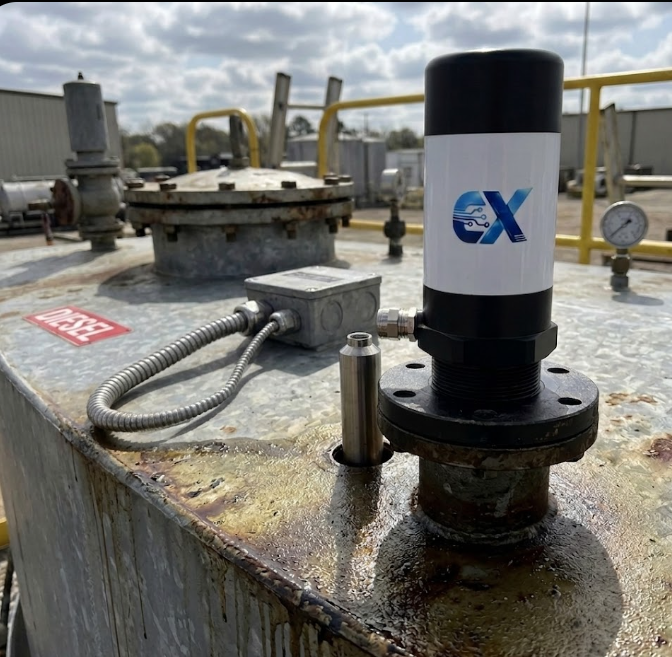
Igniting your Energy Efficiency in Agriculture: Ellenex Diesel Tank Monitoring Solutions

The tank level monitoring system market, valued at $1.05 billion in 2023, is projected to expand to $1.24 billion by 2026, maintaining a robust compound annual growth rate (CAGR) of 7.3%.

The Vital Role of Diesel Fuel in Farming Operations
Diesel, the most well-known petroleum-based fuel, is a crucial component in industrial operations worldwide. It is renowned for its high energy density and efficiency, making it an ideal choice for a diverse range of applications.
Heavy-lifter: Its combustion properties make it particularly suited for heavy-duty tasks, where reliable power and torque are paramount.
Steady Demand: With a fuel market estimated over $240 billion USD in 2024, its increasing industrial applications are driving a CAGR of 3.5% from 2024 to 2029!
Fuel is the backbone of agricultural operations, powering a multitude of machinery and equipment essential for planting, cultivating, harvesting, and transporting crops. Whether it's ploughing fields, spraying pesticides, or hauling produce to market, diesel fuel plays a pivotal role in every step of the agricultural process. Without it, the efficiency and productivity of modern farming would grind to a halt.
Efficiency Challenge: Tank Storage and application
Because, in the realm of agriculture, efficiency is paramount. Every drop of diesel fuel counts, powering essential machinery crucial for crop cultivation and farm management. Which is why tank storage is the most crucial aspect of its stable and accessible utility for an extended period of times.
With conventional approaches, monitoring diesel tank levels has been a manual and error-prone process. Farm managers often rely on visual inspections or rudimentary measuring techniques, which are not only time-consuming but also prone to inaccuracies. A typical farm with 1~5 Diesel tank across across a vast acreage of land, conducting daily or even weekly level inspections will be both fuel and time consuming.
Additionally, these outdated methods pose significant challenges:
Inaccuracy: Manual measurements are susceptible to human error, leading to unreliable readings and inaccurate estimations of fuel levels.
Wastage: Inefficient monitoring can result in overfilling or running tanks too low, leading to fuel wastage or machinery downtime at critical times.
Maintenance Issues: Lack of near real-time data makes it difficult to predict maintenance needs accurately, potentially causing machinery breakdowns and operational disruptions.
On the other hand, the growing hardware technology in remote communication is accelerating farmers' adaption in remote tank-level monitoring. With the advancement of durable and cost-effective data transmission schemes such as Low-Power Wide Area Network (LPWAN), the tank level monitoring system market, valued at $1.05 billion in 2023, is projected to expand to $1.24 billion by 2026, maintaining a robust compound annual growth rate (CAGR) of 7.3%. Within this broader industrial context, the agriculture and husbandry segment emerges as the fastest-growing application vertical, advancing at an estimated 7.0% CAGR as producers seek to mitigate the risks of supply chain disruption and rural crime.
Ellenex Diesel Tank Monitoring Solution: Agricultural Energy Efficiency
At Ellenex, we help you tackle this modern solution with the most simplified products on the market. Our Diesel Tank Level Monitoring Solutions offers an edge-cutting yet pre-configured approach to the global agricultural end-users, eliminate your energy inefficiency that persisted in the conventional monitoring method without having to worry about any technical complexity in the Internet of things (IoT) application. To address these vulnerabilities, the integration of submersible level sensors provides a robust, industrial-grade solution. Ellenex offers two primary sensor series—the PLS2 and the PLC2—designed to withstand the harsh environmental conditions of the Australian outback while delivering precision data over Low-Power Wide Area Networks (LPWAN).
PLS2: The Industrial Standard for Petroleum and Water
The PLS2 is a low-power submersible level sensor constructed from 316L stainless steel, making it compatible with non-corrosive liquids such as diesel, hydraulic oil, and water.
Technical Attribute | |
Measurement Range | 1m to 200m H2O |
Accuracy | ±0.25% Span (Typical) |
Resolution | ±0.01% Span |
Operating Temp | -20°C to +85°C |
Power Supply | Built-in Replaceable Lithium Battery |
Battery Life | 10+ Years (Application dependent) |
Enclosure Rating | IP66 (Transmitter), IP68 (Sensor Head) |
The PLS2 series is often deployed in "plug-and-play" configurations, where the device is pre-configured to transmit data immediately upon activation. For mobile applications, such as diesel bowsers on the back of utility vehicles, the PLG2 variant incorporates built-in GPS to track both fuel levels and asset location.
PLC2: Corrosion Resistance for Aggressive Media
While diesel is generally compatible with stainless steel, agricultural operations often manage other fluids that are highly corrosive, such as liquid fertilizers (ammonia and nitrogen-based solutions) or wastewater. The PLC2 series is engineered for these aggressive environments, utilizing Titanium or Hastelloy for the sensor body and Teflon-coated cables.
The selection between PLS2 and PLC2 is a critical engineering decision. Using a standard stainless steel sensor in a liquid fertilizer tank can lead to rapid degradation and sensor failure, whereas the PLC2 ensures long-term durable performance in harsh chemical environments.
Comparative Material Compatibility
Media Type | Recommended Sensor | Primary Material |
Diesel / Fuel Oil | PLS2 | Stainless Steel 316L |
Potable Water | PLS2 | Stainless Steel 316L |
Liquid Fertilizer | PLC2 | Titanium / Hastelloy |
Wastewater | PLC2 | Titanium / Hastelloy |
Acids / Minerals | PLC2 | Ceramic |
Principle and advantages of using Ellenex Solutions.
Both the PLS2 and PLC2 operate on the principle of hydrostatic pressure. A sensor submerged at the bottom of a tank measures the pressure exerted by the liquid column above it. This pressure is directly proportional to the height of the liquid. Ellenex Level sensors utilize a "vented gauge" pressure reference, which uses a vent tube within the cable to compensate for changes in atmospheric pressure, ensuring that the reading remains accurate regardless of weather patterns or altitude.
Precision Monitoring: Ellenex provides accurate, near real-time data on diesel tank levels. This precision enables farmers to optimize fuel usage, preventing both overfilling and running tanks too low, thus minimizing wastage and maximizing operational efficiency.
Remote Accessibility: Ellenex's monitoring systems can be accessed remotely via mobile devices or computers, allowing farmers to monitor fuel levels and receive alerts anytime, anywhere. This capability enables proactive decision-making, ensuring timely refills and preventing unexpected downtimes due to fuel shortages.
Predictive Maintenance: By analyzing historical usage data and trends, Ellenex systems can predict maintenance needs for diesel tanks and associated machinery. This proactive approach minimises the risk of breakdowns, enhances equipment longevity, and reduces repair costs, ultimately improving overall operational efficiency.
Reduce Costs: Minimising fuel wastage and preventing unplanned downtime translate directly into cost savings for farmers. With Ellenex, every drop of diesel counts, contributing to a more sustainable and profitable agricultural operation.
Increase Productivity: With near real-time visibility into fuel levels and predictive maintenance insights, farmers can optimise their machinery usage, streamline workflows, and maximise productivity during critical periods such as planting and harvesting seasons.
Enhance Sustainability: By minimising fuel wastage and reducing carbon emissions associated with inefficient practices, Ellenex Diesel Tank Level Monitoring Systems contribute to a more sustainable agricultural industry, aligning with global efforts towards environmental conservation.

Connectivity and Network Infrastructure
The effectiveness of any IoT monitoring solution is fundamentally dependent on the reliability of the data transmission scheme. For remote agricultural settings, where traditional Wi-Fi and cellular coverage are often inadequate, LPWAN technologies provide the necessary range and battery efficiency.
LoRaWAN: The De Facto Agricultural Standard
LoRaWAN (Long Range Wide Area Network) has emerged as the preferred choice for large-scale farms. Its sub-gigahertz frequency use allows for robust signal penetration through dense vegetation, hills, and buildings.
Wide Coverage: A single LoRaWAN gateway can transmit signals over distances of up to 15 kilometers in open terrain.
Energy Efficiency: Devices can operate for approximately 10 to 20 years on a single battery, significantly reducing maintenance costs compared to cellular-based sensors.
Low Cost: LoRaWAN operates in unlicensed radio frequency bands, eliminating the need for expensive cellular data plans.
Scalability: Farmers can easily add hundreds of sensors—for soil moisture, weather, and livestock tracking—to the same gateway infrastructure.
NB-IoT and LTE-M: The Cellular Alternative
For properties within range of established telecommunications towers NB-IoT (Narrowband IoT) offers a "carrier-grade" solution. While it typically consumes more power than LoRaWAN, it provides seamless integration into existing cellular networks without the need for the farmer to install and maintain their own gateway.
Software Integration and Data Visualization
Data generated by sensors like the PLS2-N requires a sophisticated platform for visualization, alerting, and integration with broader farm management ecosystems.
The Ellenex Software Platform
The Ellenex platform is a comprehensive, multi-tenant solution designed for industrial infrastructure monitoring. It provides a user-centric interface that allows farmers to view their assets on a map and receive proactive alerts.
Real-Time Visualization: Near real-time reporting of fuel levels in liters or percentage of capacity.
Advanced Alerting: Variable alarm settings for high and low thresholds. For example, a sudden drop in fuel levels at night can trigger an immediate SMS alert, indicating potential theft.
Predictive Analytics: By analyzing historical usage trends, the system can predict when a tank will reach "critical low" status, allowing for efficient refill planning during supply shortages.
Volume Calculation: Complex formulas are applied to raw pressure data to account for tank geometry (e.g., horizontal cylindrical tanks vs. vertical tanks), ensuring precise inventory management.
Conclusion
The tank level monitoring market is expected to reach $1.65 billion by 2030. The next phase of development will see the integration of Satellite IoT, which Ellenex is currently developing for its PLS and PLC series. This will eliminate the final barrier for the most remote Australian properties that are beyond the reach of even LoRaWAN or NB-IoT networks.
The 2026 fuel crisis has underscored that diesel is the lifeblood of modern agriculture. Managing it with "manual and error-prone" processes is no longer a viable business strategy. By embracing industrial IoT solutions, all agribusinesses can ignite their energy efficiency, secure their assets, and build a more sustainable and profitable future in an increasingly volatile global market.
Frequently Asked Questions
What are the primary financial and operational benefits of remote diesel monitoring?
Remote monitoring eliminates the need for manual, error-prone inspections by providing 24/7 visibility into fuel levels from any web-enabled device. This automation significantly reduces labor costs and vehicle expenses associated with driving between remote tank sites, which is particularly valuable for large properties. Furthermore, the system allows managers to track historical usage patterns, facilitating data-driven decisions for inventory optimization and replenishment scheduling.
Beyond logistics, the technology acts as a critical security tool by providing near real-time alerts for sudden fuel losses, which often indicate siphoning or leaks. This proactive approach helps prevent costly downtime caused by unexpected stockouts during peak operational windows, such as harvest or planting seasons. By ensuring a stable fuel supply, businesses can navigate market volatility and supply chain disruptions more effectively.
How does the sensing and communication technology work in remote areas?
Most advanced systems utilize submersible hydrostatic level transmitters that measure the pressure exerted by the liquid column above them. This pressure is directly proportional to the fuel height and is recorded with high accuracy—often within a range of ±0.25% Span. Because these devices are battery-operated and ruggedized, they can be easily retrofitted into existing infrastructure without the need for complex wiring or external power sources.
Data is transmitted through Low-Power Wide Area Networks (LPWAN) like LoRaWAN or NB-IoT, which are specifically designed for long-range communication in remote or hard-to-reach locations. LoRaWAN, for instance, can transmit data over 15 kilometers in open terrain and allows sensors to last up to 10 years on a single battery due to its extreme energy efficiency. This ensures reliable connectivity and continuous visibility even in the challenging environmental conditions of the outback.
How do I choose between a standard (PLS2) and a corrosion-resistant (PLC2) Level sensor?
Selecting the appropriate sensor depends primarily on the chemical compatibility of the media being stored. For standard diesel, hydraulic oil, and potable water, a stainless steel sensor like the PLS2 is the industrial standard due to its durability and cost-effectiveness. It is essential to ensure that the sensor's housing (typically 316L stainless steel) and O-rings are compatible with the specific fuel type to prevent long-term degradation.
If your operation involves corrosive additives like AdBlue (diesel exhaust fluid) or liquid fertilizers, a specialized sensor like the PLC2 is required. The PLC2 utilizes high-grade materials such as Titanium or Hastelloy and specialized cable coatings to withstand aggressive chemical environments where standard stainless steel would likely fail. Using the wrong material can lead to rapid sensor failure and inaccurate readings.
What are the best practices for installing and maintaining these level sensors?
Proper installation is vital for measurement accuracy and typically involves lowering the sensor probe vertically through a top access port. The sensor should be positioned away from liquid inlets to avoid the turbulence created during refills and must be kept roughly 5–10 cm above the tank floor to prevent the process connection from becoming blocked by accumulated sludge or sediment. In mobile applications or tanks with high agitation, the probe should be housed in a protective sleeve to prevent swaying.
Periodic maintenance and calibration are recommended to account for potential sensor drift or changes in fluid density over time. Modern cloud platforms simplify this by allowing for remote "zero-point" adjustments and the configuration of specific tank geometries (such as horizontal cylindrical shapes) to convert raw pressure data into precise volume readings in liters. Sensors should also be inspected for physical damage or contaminants on the probe electrodes to ensure long-term stability.
How can these systems help prevent fuel theft on remote properties?
Remote monitoring systems provide an essential layer of security by detecting "drains" or unauthorized siphoning events as they occur in real time. Smart sensors can be configured to trigger immediate SMS or push notifications if fuel levels drop suddenly outside of scheduled operational hours from the Ellenex Software Platform. This "inventory visibility" ensures that theft is noticed immediately rather than days or weeks later during a manual check, allowing for faster intervention and evidence collection.
For maximum protection, level sensors are often integrated into a broader security ecosystem that includes GPS tracking for mobile assets and AI-powered cameras. For example, the PLG2 model includes built-in GPS to track both the location and fuel level of mobile diesel bowsers. When combined with smart access controls and motion-activated lighting, these sensors help build a comprehensive deterrent against the rising trend of rural crime.
Useful Links
Ellenex Offerings


Related blogs
Unlocking the Power of LoRaWAN Sensors: A Game-Changer for IoT
Time matters, Get it done in 5min- Unique design for easy installation on top of diesel tanks
Tank Pressure and Temperature Monitoring: Embracing IoT Sensors for Safer and Smarter Operation
Enhancing Tank Level Monitoring with Ellenex Submersible Level Sensor in Harsh Outdoor Applications
Useful Links for More Study:
What is LPWAN Technology?
What is LoRaWAN Technology?
What is NB-IoT / LTE Cat M1 Technology?