

Effortless Efficiency: Revolutionize Your Fuel Monitoring with Ellenex's Diesel level sensor.
- ellenex team

- Feb 28
- 11 min read
The management of distributed fuel assets has historically represented one of the most significant operational hurdles for industrial, agricultural, and logistics sectors. Traditional fuel monitoring, characterized by manual dip-sticking or mechanical float-based systems, is increasingly recognized as a point of failure due to inherent inaccuracies, high labor costs, and the safety risks associated with physical tank inspections. The advent of the Industrial Internet of Things (IIoT) has catalyzed a paradigm shift toward "Effortless Efficiency," a concept exemplified by the deployment of Ellenex PLS2-L and PLS2-N diesel level sensors. These devices represent the convergence of robust mechanical engineering and sophisticated low-power wide-area network (LPWAN) telemetry, offering a transformative alternative to conventional monitoring regimes. This report examines the technical foundations, operational advantages, and strategic implications of these technologies within the context of mission-critical infrastructure, such as underground generator tanks and remote heating systems.
Level Measurement Technology
The selection of a level sensing technology for diesel fuel is a critical engineering decision that must account for the physical properties of the medium and the environmental constraints of the storage vessel. Diesel tanks, particularly those located underground or in remote areas, present a unique set of challenges, including vapor accumulation, temperature fluctuations, and limited access for maintenance.
Hydrostatic sensors are inherently superior for diesel applications compared to non-contact alternatives like ultrasonic sensors. Ultrasonic devices, which transmit sound waves through the air to detect the fuel surface, are susceptible to signal interference from "foam, turbulence, dust, and temperature gradients". In diesel tanks, temperature changes often cause paraffin wax condensation or the release of vapors in the ullage space, which can attenuate ultrasonic waves and lead to "false echoes" or "signal loss". Because the PLS2 is submerged at the bottom of the tank, it remains immune to surface conditions, providing a continuous and reliable data stream even in the presence of heavy vapors or surface agitation.
Hardware Engineering and Material Integrity
The environmental resilience of a diesel level sensor is predicated on its mechanical construction and the compatibility of its wetted parts with hydrocarbons. The Ellenex PLS2 series is specifically engineered for "harsh industrial conditions" and "outdoor applications," utilizing materials that ensure long-term stability without the risk of corrosion or degradation.
Material Science of the PLS2 Series
The primary housing and sensing probe of the PLS2 are constructed from high-grade stainless steel, typically SS316L. This material is chosen for its exceptional resistance to the corrosive elements often found in diesel fuel, including sulfur compounds and moisture that may accumulate at the bottom of the tank. The sensor's ability to withstand "millions of load cycles" ensures that the diaphragm maintains its elastic properties over a service life of many years.
In applications involving more aggressive chemicals or corrosive wastewater, Ellenex provides specialized variants such as the PLC3 or PLC2, which utilize "Titanium" or other resistant materials. However, for standard diesel and oil monitoring, the stainless steel construction of the PLS2 provides the optimal balance of "durability and cost-effectiveness".
Ingress Protection and Mechanical Specifications
A critical feature for sensors deployed in underground tanks is their Ingress Protection (IP) rating. The PLS2 series is generally rated at IP65, ensuring protection against dust and water jets. For applications where the entire transmitter might be submerged or subjected to constant high humidity in a manhole, the PLS3 variant offers an IP68-rated housing. This allows the device to function reliably even if the installation site becomes flooded during heavy rain, a common occurrence in remote telecommunications sites and underground utility vaults.
Connectivity Architectures: LoRaWAN vs. NB-IoT
The distinction between the PLS2-L and the PLS2-N lies in their communication technology. Both are Low-Power Wide-Area Network (LPWAN) protocols, but they serve different strategic requirements regarding network ownership, coverage, and power efficiency.
LoRaWAN (PLS2-L): Private Network Autonomy
The PLS2-L utilizes the LoRaWAN protocol, which operates in the unlicensed Industrial, Scientific, and Medical (ISM) radio bands. This technology is characterized by its ability to cover "vast distances" (up to 15 kilometers in rural settings) while consuming "ultra-low power". The primary advantage of LoRaWAN for remote diesel monitoring is the ability for a business to deploy its own private network. For a remote mining site or a large agricultural ranch with no cellular coverage, a single LoRaWAN gateway can support hundreds of PLS2-L sensors across the entire facility.
LoRaWAN is inherently more energy-efficient than cellular-based alternatives because it uses an asynchronous, Aloha-based communication protocol. Devices remain in a deep sleep mode for the vast majority of their life, only waking up briefly to transmit small packets of data. This allows the PLS2-L to achieve a battery life often exceeding "10 to 15 years," making it a truly "set-and-forget" solution for remote assets.
NB-IoT and LTE Cat-M1 (PLS2-N): Carrier-Grade Reliability
The PLS2-N leverages licensed cellular spectrum through Narrowband IoT (NB-IoT) or LTE Cat-M1 technology. These protocols operate on the existing 4G and 5G infrastructure provided by major telecommunications carriers. The "N" variant is particularly effective for "deep indoor penetration" and "underground locations," where the robust cellular signal can penetrate concrete and earth more effectively than unlicensed radio frequencies.
NB-IoT offers "carrier-grade security," utilizing 256-bit encryption and SIM-based authentication, which is often a requirement for mission-critical infrastructure and government projects. While NB-IoT has higher peak power consumption compared to LoRaWAN, the PLS2-N is still designed for "years of battery usage" by optimizing report intervals and minimizing network registration time.
Feature | LoRaWAN (PLS2-L) | NB-IoT (PLS2-N) |
Network Ownership | Private or Public Gateways | Carrier Managed |
Typical Coverage | 5–15 km | Cell Tower Dependent |
Penetration | Moderate | Superior (Underground) |
Security | AES 128-bit | 3GPP 256-bit |
Power Efficiency | Highest (10+ years) | High (5–10 years) |
Roaming | Limited by frequency plans | Global Roaming Support |
Rapid Commissioning and the 5-Minute Installation Success Story of Diesel Level Sensor
The economic value of IIoT solutions is often determined not just by the hardware cost, but by the "Total Cost of Ownership" (TCO), which includes installation and maintenance. The Ellenex diesel monitoring solution is distinguished by its "pre-configured" and "plug-and-play" design, which allows for deployment in less than five minutes without the need for specialized technicians.
Success Story: Underground Generator Fuel Management
A notable success story involves a client operating a generator and heating system in a "remote area with limited access." Previously, this client relied on manual measurements, a process that was not only "time-consuming" but also "prone to errors" that could lead to unexpected generator shutdowns during power outages. The installation of an Ellenex device transformed this workflow. Because the device arrived "pre-configured," the onsite personnel simply had to lower the sensor into the underground tank and secure it. There was no requirement for "complex programming, wiring, or connection hassles".
Once the power button is pressed, the sensor automatically connects to the designated network and begins transmitting "near real-time updates" to the cloud platform. For this client, the ability to monitor fuel usage from "anywhere in the world" meant that they could plan fuel deliveries well in advance, ensuring the "seamless operation of machinery and generators" even in the most isolated locations.

The Activation and Configuration Logic
The "5-minute" paradigm is supported by a streamlined activation workflow. Devices are typically associated with a user account at the factory level, meaning the digital twin of the sensor is already live on the Ellenex portal before the hardware arrives on site. The physical installation involves:
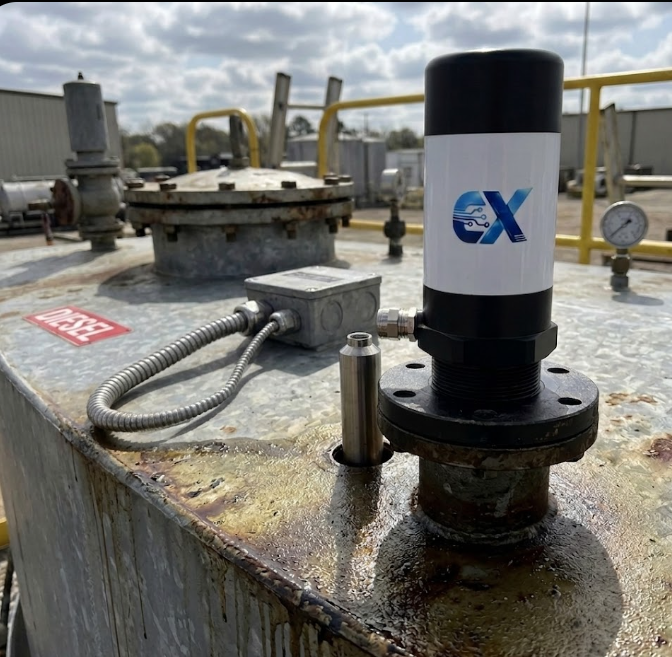
Mounting: Securing the transmitter head using a bracket or rod mount, typically on the exterior of the tank or within the manhole riser.
Deployment: Lowering the submersible probe to the bottom of the tank.
Activation: Pressing the external on/off switch or connecting an internal jumper.
Verification: Confirming data reception on the "Ellenex Asset Monitoring App" or web dashboard within approximately one minute of activation.
This process eliminates the traditional "field commissioning" phase, which often requires a laptop, configuration cables, and hours of troubleshooting. For companies with "multiple locations," this allows for rapid scaling of the monitoring solution across dozens or hundreds of sites in a fraction of the time required for traditional wired systems.
A level sensor only provides a depth measurement (h). For a fuel manager, the critical metric is volume (V). The Ellenex Software Platform acts as the intelligence layer that translates raw sensor data into actionable business insights through "complex formulas," "volume calculation," and "predictive analytics".
Strategic Operational Benefits and Return on Investment (ROI)
The adoption of remote diesel monitoring is driven by a clear financial and operational rationale. By shifting from reactive, manual processes to proactive, digital management, organizations can realize substantial "cost savings" and "enhanced operational efficiency".
Reducing Manual Labor and Logistics Costs
For companies with distributed assets—such as telecommunications firms with hundreds of tower sites or agricultural cooperatives with dispersed tanks—the cost of "routine inspections" is significant. These inspections require vehicles, fuel, and technician time, all for the purpose of simply reading a gauge. The PLS2 series "drastically reduces the need for these costly manual inspections," allowing staff to focus on actual maintenance rather than data collection.
Furthermore, "near real-time data" allows for the optimization of fuel delivery routes. Instead of refilling tanks on a fixed schedule, which often results in trucks visiting tanks that are still 70% full, delivery managers can prioritize "timely inventory replenishment" based on actual need. This "just-in-time" delivery model reduces the number of truck trips, lowering fuel costs and the organization's overall "carbon footprint".
Risk Mitigation and Compliance
Fuel spills and leakages represent a massive environmental and financial risk. Inefficient monitoring increases the risk of "diesel spills, leaks, and inventory outages," which can lead to "significant regulatory fines" and "environmental damage". The high precision of the PLS2 allows for early detection of slow leaks that might be missed by manual dip-sticking.
For underground storage tanks (UST), continuous monitoring is often a regulatory requirement. The historical data analysis provided by the Ellenex platform serves as an "auditable record of compliance," simplifying the reporting process for environmental agencies. By integrating "encrypted ultra-low power communication," the system ensures that sensitive operational data remains secure while providing the transparency required for modern industrial governance.

Conclusion: Revolutionizing Fuel Monitoring for the Modern Enterprise
The transition from manual fuel measurement to an automated, IIoT-driven regime is no longer a luxury but a necessity for organizations seeking to maintain a competitive advantage. The Ellenex PLS2-L and PLS2-N diesel level sensors, supported by a sophisticated cloud platform and flexible LPWAN connectivity, offer a comprehensive solution to the perennial challenges of fuel management.
By providing "near real-time updates," "high-accuracy hydrostatic measurement," and a "5-minute installation" process, Ellenex has effectively removed the technical and economic barriers to digital transformation. Whether managing a single underground tank for a backup generator or a global fleet of mobile fuel assets, the ability to monitor fuel usage from "anywhere in the world" empowers businesses to optimize their logistics, mitigate environmental risks, and ensure the uninterrupted operation of their mission-critical machinery.
The success story of the underground tank installation in a remote area is a testament to the "Effortless Efficiency" of this technology. As the Industrial IoT ecosystem continues to mature, the integration of predictive analytics and automated enterprise workflows will further cement the role of these sensors as essential components of modern industrial infrastructure. Organizations that embrace these technologies today will be better positioned to face the operational and environmental challenges of tomorrow, securing their fuel resources through the power of intelligent, connected data.
Frequently Asked Questions
Why are submersible level sensors preferred over ultrasonic sensors for diesel monitoring?
Hydrostatic sensors like the PLS2 series measure the head pressure exerted by the fuel column, providing a direct correlation to the liquid height that remains unaffected by conditions at the surface. This contact-based method is particularly advantageous in diesel environments where vapors can accumulate in the tank's headspace or where surface foam and turbulence might occur. Because the measurement principle relies on the physical weight of the fuel rather than sound reflections, the data remains stable regardless of air temperature fluctuations or atmospheric disturbances within the tank.
In contrast, ultrasonic sensors emit sound waves that can be easily disrupted by "false echoes" or signal attenuation caused by heavy diesel vapors or condensation on the transducer face. While non-contact sensors are often sought for their ease of top-mounting, they frequently require frequent cleaning and may experience signal loss in heavy fog or high-humidity environments. The submersible design of hydrostatic transmitters ensures they are shielded from these environmental factors, delivering higher accuracy typically around +/- 0.1% to +/- 0.25% of the full scale.
What are the main differences between LoRaWAN and NB-IoT connectivity for remote tanks?
The choice between LoRaWAN (used in the PLS2-L) and NB-IoT (used in the PLS2-N) depends largely on the deployment environment and network ownership requirements. LoRaWAN operates on unlicensed spectrum, allowing businesses to set up their own private gateways in remote areas like mining sites or farms where cellular coverage is absent. It is optimized for ultra-low power consumption, often enabling a battery life exceeding 15 years, which makes it ideal for truly "set-and-forget" installations in isolated locations.
Conversely, NB-IoT leverages existing 4G and 5G cellular networks managed by telecommunications carriers. This protocol is highly effective for applications requiring deep indoor or underground penetration, as the licensed cellular signal can more easily traverse thick walls and concrete structures. While NB-IoT generally has a higher peak power draw compared to LoRaWAN, it offers carrier-grade security through 256-bit encryption and does not require the upfront cost of purchasing and installing local gateway infrastructure.
How is fuel volume accurately calculated for non-standard tank shapes?
Calculating the volume in a horizontal cylindrical tank is more complex than in vertical tanks because the relationship between fuel height and volume is non-linear. For example, if a horizontal tank is 25% full by height, its actual volume is typically only around 19.5% of its total capacity. This is because the circular cross-section means that a small change in height near the bottom of the tank represents a much smaller volume change than the same height change near the wider center or "equator" of the vessel.
The monitoring platform addresses this complexity by applying specialized geometric modeling to every incoming data point from the sensor. Users can select their specific tank geometry—such as horizontal, vertical, or elliptical cylinders—and input relevant dimensions like diameter and length. The software then uses complex trigonometric formulas to automatically convert raw depth measurements into accurate volume metrics, which are essential for inventory management and predictive delivery scheduling.
How does remote monitoring support predictive maintenance for diesel systems?
Remote diesel monitoring goes beyond simple level checks by using rate-of-change analysis and historical trending to identify operational anomalies before they become failures. The cloud platform continuously analyzes fuel consumption patterns, which allows for the early detection of issues like slow leaks or unauthorized fuel removal that might be missed during manual inspections. By receiving near real-time updates, managers can address these discrepancies immediately, preventing environmental fines or costly emergency repairs.
Furthermore, the system allows for the configuration of customizable threshold alerts and high/low alarms that are sent via SMS, email, or push notifications. These alerts can be integrated directly into enterprise task management systems using APIs and Webhooks, automating the creation of work orders when fuel levels reach a critical replenishment point. This proactive approach ensures that mission-critical equipment, such as backup generators for hospitals or data centers, never experiences downtime due to unexpected fuel exhaustion.
Is the installation process difficult for these remote monitoring sensors?
The installation of these sensors is designed to be a "plug-and-play" process that typically takes less than five minutes and does not require specialized technical expertise. Most devices arrive pre-configured for the user's account, meaning the digital settings and network credentials are active before the hardware reaches the site. Because the sensors are battery-operated and utilize wireless LPWAN connectivity, there is no need for complex wiring, trenching, or field programming.
The physical deployment involves three simple steps: mounting the transmitter head using a bracket, lowering the submersible probe to the bottom of the tank, and pressing the activation switch. Once powered on, the device automatically connects to the designated network and begins transmitting data to the web dashboard or mobile app within about one minute. This streamlined commissioning process allows companies with hundreds of remote locations to scale their monitoring solution rapidly and with minimal labor costs.
Related Links
Useful Links for More Study:
What is LPWAN Technology?
What is LoRaWAN Technology?
What is NB-IoT / LTE Cat M1 Technology?


