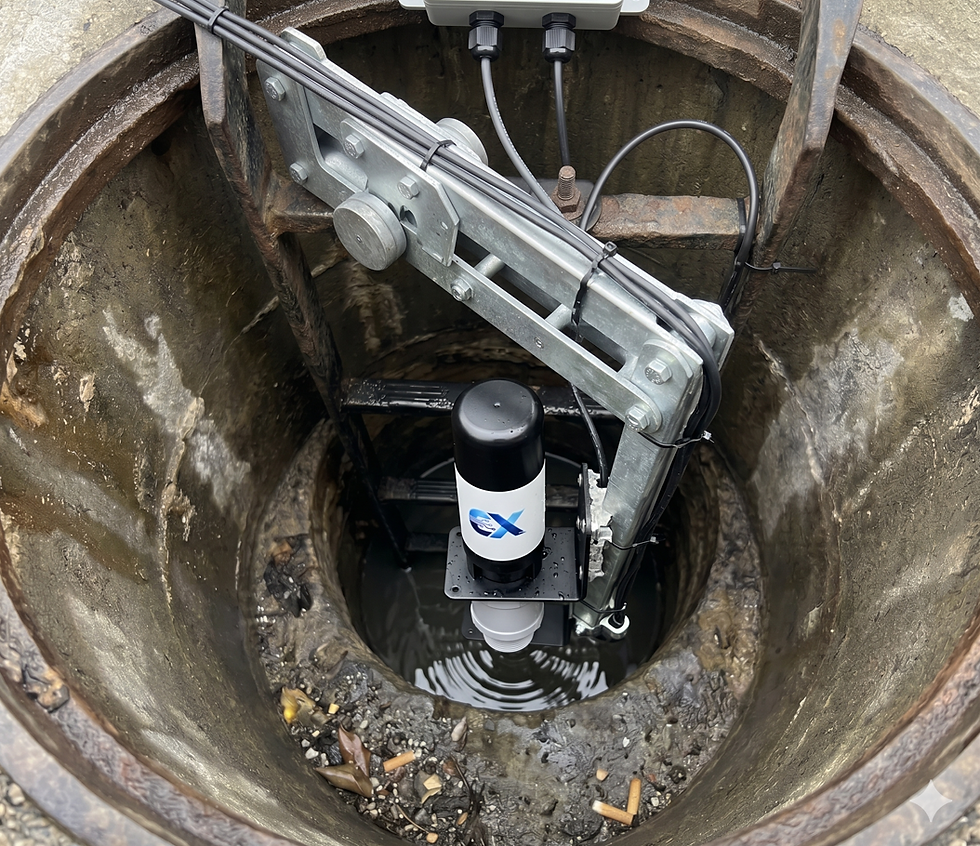
Leveraging Energy-Efficient Radar (DRC3) and Submersible (PLS3) Level Sensors for Smart Manhole Monitoring

"LPWAN-based IoT solutions can reduce maintenance costs by up to 40% and significantly lower overflow incidents, presenting a substantial opportunity for utilities to enhance efficiency, public safety, and environmental compliance."
The modernization of municipal wastewater and stormwater infrastructure represents a critical pillar in the development of sustainable smart cities. As urban populations expand, the burden on subterranean utility networks increases, necessitating a shift from traditional reactive maintenance to proactive, data-driven management. Historically, the monitoring of manholes—the primary access points for sewer and drainage systems—has been a significant operational bottleneck, characterized by labor-intensive manual inspections and a high incidence of unforeseen overflows.

However, the emergence of advanced, energy-efficient sensing solutions, such as the DRC3 radar and PLS3 submersible hydrostatic level sensors, has provided utilities with the tools required to achieve real-time visibility into these concealed environments. By integrating these sensors with Low-Power Wide-Area Network (LPWAN) technologies, municipalities can realize substantial reductions in maintenance expenditures while enhancing public safety and environmental compliance.
The Operational Context of Modern Wastewater Management
Manholes are essential nodes within the urban hydraulic network, facilitating the maintenance of sewers, storm drains, and utility conduits. Despite their importance, the management of these assets has remained largely stagnant for decades, relying on periodic physical checks by utility personnel. This manual approach is inherently flawed; it is time-consuming, prone to human error, and involves significant safety risks associated with confined space entry and exposure to hazardous gases. Furthermore, the operational costs are substantial, driven by fuel consumption for inspection vehicles and the labor hours required for routine site visits.
The environmental and financial consequences of failing to monitor manhole levels are severe. Blockages caused by debris or structural failures can lead to Sanitary Sewer Overflows (SSOs). These incidents release untreated wastewater into local ecosystems, contaminating waterways and triggering stringent regulatory penalties. In storm systems, unmonitored rising levels can lead to localized flooding, damaging property and infrastructure. The implementation of smart manhole monitoring systems addresses these risks by providing continuous tracking of water levels and flow dynamics, enabling early detection of anomalies before they escalate into catastrophic failures.
The Need for Smart Manhole Monitoring
Manholes serve as essential access points for utility maintenance and inspection. Monitoring these access points has traditionally involved manual checks, which are labour-intensive, prone to errors, and involve considerable fuel consumption and operational costs due to the need for frequent field visits. Issues like blockages, overflows, structural damage, and unauthorized access can lead to environmental hazards, safety concerns, and substantial financial consequences if not promptly addressed.
Smart manhole monitoring systems, which integrate sensors, wireless communication, and data analytics, provide a solution by continuously tracking parameters such as water levels, gas concentration, and structural integrity. This shift from reactive to proactive management helps in early problem detection, reduces maintenance costs, enhances public safety, and significantly lowers the carbon footprint by diminishing the need for energy-consuming inspection practices.
Ellenex Radar(DRC3) and submersible(PLS3) Level Sensors: A Game-Changer for Water Infrastructure Monitoring
Ellenex, a leader in low-power sensor solutions, offers a range of ultrasonic and distance-level sensors that are particularly well-suited for smart manhole monitoring. These sensors provide precise, continuous measurements, are highly energy-efficient, and are engineered to withstand harsh urban environments—making them a perfect fit for modern smart city infrastructure.
Radar Level Sensor(DRC3)
In the selection of non-contact level measurement technologies for manhole environments, radar has emerged as a superior paradigm. The Ellenex DRC3 series, such as the DRC3-L and DRC3-N, utilizes electromagnetic waves, which possess fundamental physical advantages in the volatile conditions of a sewer. Radar sensors operate by transmitting high-frequency radio waves and measuring the time it takes for these waves to reflect off the liquid surface and return to the receiver.
The DRC3 utilizes Frequency Modulated Continuous Wave (FMCW) technology. Rather than sending a single pulse, an FMCW radar sensor continuously sweeps the transmitted frequency over a defined bandwidth. By comparing the frequency of the reflected signal with the signal being transmitted at that moment, the sensor can calculate the distance with extreme precision. This continuous sweeping allows the sensor to collect a vast number of data points, which are processed to filter out surface turbulence, foam, and floating debris. This ensures that the radar "sees" through surface agitation, providing a stable average level even during high-flow events.
Submersible Level Sensor(PLS3)
While non-contact radar is ideal for many applications, submersible hydrostatic sensors provide a robust solution for deep-well monitoring and surcharged environments. The Ellenex PLS3 represents a specialized submersible level transmitter designed for groundwater and tank monitoring with high-grade durability.
The PLS3 is lowered directly into the liquid media. It contains a sensitive diaphragm that deflects in response to the pressure of the liquid head, converting this deflection into an electrical signal that corresponds to the level. These sensors offer monitoring ranges from 1m up to 200m, allowing for measurement at extreme depths.
Feature | Radar Level Sensing (DRC3) | Submersible Hydrostatic Sensing (PLS3) |
Measurement Principle | Electromagnetic Time-of-Flight (Non-contact) | Hydrostatic Pressure (Contact) |
Environmental Resilience | Immune to steam, vapor, and gas | Immune to atmospheric turbulence |
Range Capacity | Up to 30 meters | Up to 200 meters |
Accuracy | High (±2mm to ± 15mm depending on conditions) | High (Precision based on pressure range) |
Maintenance Need | Very Low (No contact with media) | Moderate (Periodic cleaning of diaphragm) |
Primary Media | Liquids, Solids, Pastes | Liquids (Water, Groundwater, Tanks) |
Key Benefits of Ellenex Radar(DRC3) and submersible(PLS3) Level Sensors:
Energy Efficiency and Reduced Carbon Footprint: Ellenex sensors are designed with low-power technology that ensures longer battery life, which is crucial for remote installations like manholes where frequent battery replacements are impractical. By minimizing the need for physical inspections, these sensors help reduce fuel consumption and the associated carbon emissions, contributing to a greener environment.
Cost Savings: Traditional manhole monitoring methods involve significant operational costs, including fuel for inspection vehicles, labour costs, and potential overtime for emergency responses. By providing accurate, near real-time data remotely, Ellenex sensors drastically reduce the need for these costly manual inspections and emergency interventions, leading to substantial cost savings for municipalities and utility companies.
High Accuracy and Reliability: Ellenex's Radar(DRC3) and submersible(PLS3) level sensors deliver accurate readings even in fluctuating environmental conditions, ensuring reliable data collection and minimizing the chances of false alarms. This accuracy enables more effective decision-making and timely maintenance actions, further reducing the costs associated with reactive repairs.
Environmentally Friendly and Sustainable: By integrating Ellenex sensors into smart manhole monitoring systems, cities can reduce their reliance on fossil fuels used for frequent site visits and maintenance checks. This shift not only lowers the overall energy consumption but also reduces wear and tear on vehicles, prolonging their lifespan and reducing waste.
Resource Conservation: Ellenex sensors enable predictive maintenance by providing near real-time data on the status of manholes. This allows municipalities to prioritize maintenance schedules based on actual needs rather than routine checks, optimizing resource allocation and reducing unnecessary use of materials and labour.
LPWAN: The Connectivity Backbone of Smart Infrastructure
The feasibility of deploying thousands of sensors across an urban landscape hinges on the efficiency of the communication network. Low-Power Wide-Area Networks (LPWAN) have emerged as the definitive solution for underground and remote monitoring.
Narrowband IoT (NB-IoT) and LTE-M
NB-IoT and LTE Cat M1 are cellular-based LPWAN technologies designed for high-density IoT applications. For manhole monitoring, NB-IoT is particularly valuable due to its superior signal penetration, allowing it to reach deep into underground structures through cast-iron covers. These technologies utilize power-saving protocols, extending battery life to a decade or more.
LoRaWAN and Network Efficiency
LoRaWAN (Long Range Wide Area Network) allows municipalities to deploy and own their own network infrastructure. The DRC3-L, for instance, is a LoRaWAN-operated sensor. LoRaWAN sensors can operate for 5–10 years on a single battery, transmitting small packets of data while remaining in sleep mode most of the time. Observations show that LoRaWAN devices can be up to 20% more efficient than NB-IoT during sleep cycles, making them ideal for stationary assets like water tanks.

Strategic Applications in Integrated Utility Solutions
Ellenex offers three core solutions that leverage radar and submersible technologies to address specific urban infrastructure challenges.
This solution utilizes ruggedized, IP68-rated sensors to provide near real-time visualization of manhole levels. By deploying sensors like the DRC3 and PLS series, utilities can eliminate the need for manual data collection in hazardous environments. This approach enables variable alarming for high and low thresholds, allowing crews to respond to potential overflows before they occur, ultimately reducing maintenance costs by up to 40%.
Monitoring underground waterways requires sensors that can withstand rapid turbulence and debris during storm events. The DRC3 radar is particularly effective here because its FMCW technology can calculate an average level despite surface agitation. This allows for accurate flood alarming and capacity monitoring of culverts and detention basins, protecting urban property and infrastructure from water damage.
Wastewater tanks often contain aggressive or viscous media that require a technically controlled approach. The PLS3 and corrosion-resistant variants provide a reliable contact-based measurement for these environments, while the DRC3 offers a non-contact alternative for highly corrosive tanks. These sensors transmit level data to remote dashboards, allowing operators to understand water availability and refill needs without manual site visits.
The Broader Impact: Cost Savings, Environmental Benefits, and Resource Optimization
The integration of Ellenex Radar(DRC3) and submersible(PLS3) Level Sensors into smart manhole monitoring systems provides a multitude of benefits that extend beyond just operational efficiency:
Cost Savings: By reducing the frequency of manual inspections and enabling predictive maintenance, cities can cut down on labour, fuel, and repair costs.
Environmental Impact: Fewer inspection trips result in reduced fuel consumption and emissions, supporting urban sustainability goals. Additionally, preventing overflows and blockages reduces pollution in local waterways.
Resource Conservation: With near real-time data, maintenance teams can respond only when necessary, ensuring that human and material resources are used more efficiently and sustainably.
Ellenex's energy-efficient ultrasonic and distance level sensors are revolutionizing the way cities approach manhole monitoring. Their low power consumption, high accuracy, durability, and ease of integration with IoT systems make them an ideal choice for sustainable urban infrastructure management. As cities strive to become smarter and more connected, innovative solutions like Ellenex sensors will play a pivotal role in enhancing safety, reducing costs, conserving resources, and minimizing environmental impact.
Conclusion
The transition to smart infrastructure monitoring using DRC3 radar and PLS3 submersible solutions represents a fundamental shift in the economics and safety of urban utility management. By leveraging the physical advantages of radar in volatile atmospheres and the rugged reliability of submersible hydrostatic sensors in deep environments, municipalities can achieve a level of operational visibility that was once impossible.
The integration of these sensors with LPWAN technologies ensures that this visibility is cost-effective and long-lasting, providing a clear return on investment through reduced labor, fuel, and repair costs. As cities strive to become more resilient, the adoption of these energy-efficient, high-precision sensing solutions will be the key differentiator in their ability to manage critical water and wastewater infrastructure sustainably.
Frequently Asked Questions
Why is radar technology (like the DRC3) considered superior to ultrasonic sensors for manhole environments?
Radar technology, specifically the DRC3-L, is considered superior for manhole monitoring because it utilizes electromagnetic waves that travel at the speed of light, rather than the sound waves used by ultrasonic sensors. This fundamental physical difference means radar signals can penetrate steam, vapor, and fluctuating air properties without the signal attenuation or refraction that typically plagues sound-based devices. In the confined and volatile atmosphere of a sewer, changes in temperature and humidity can significantly alter the speed of sound, leading to measurement errors in ultrasonic systems that radar sensors inherently avoid.
Furthermore, the DRC3 utilizes Frequency Modulated Continuous Wave (FMCW) technology to handle surface turbulence and foam. Unlike ultrasonic pulses that scatter off ripples or debris, the FMCW radar sweeps the surface over a defined frequency span to calculate a stable average level, essentially seeing turbulent water as a "blank lake". While radar units often have a higher initial purchase price, their reliability and the lack of a need for seasonal recalibration result in a much lower total cost of ownership over their 10 to 15-year lifespan.
How do these sensors transmit data through heavy cast-iron manhole covers and from deep underground?
To transmit data from deep underground and through heavy cast-iron manhole covers, these systems leverage specialized Low-Power Wide-Area Network (LPWAN) protocols such as NB-IoT and LTE-M. These technologies are designed specifically for industrial IoT, offering a 20dB signal gain over standard cellular networks, which provides the superior penetration required to reach from subterranean structures to the nearest base station. This ensures that even sensors located deep within the urban infrastructure can maintain a reliable connection without the need for external antennas or expensive wiring.
Beyond connectivity, these protocols are engineered for extreme energy efficiency to support battery-operated devices. By utilizing power-saving protocols, the sensors remain in a deep-sleep state for the vast majority of their life, awakening only to transmit small packets of data every few hours. This "deploy-and-forget" capability allows a single device to operate for up to a decade on its internal battery, making large-scale municipal deployments both practical and cost-effective.
When should a utility choose a submersible sensor (PLS3) over a non-contact radar sensor (DRC3)?
The choice between a submersible sensor like the PLS3 and a radar sensor like the DRC3 depends largely on the risk of "surcharging," where water levels rise to the very top of the manhole. A non-contact radar sensor is ideal for most scenarios because it avoids fouling by not touching the liquid; however, if the water level reaches the sensor’s lens during an overflow event, it may become temporarily "blinded". In contrast, the PLS3 is designed to be fully submerged and uses hydrostatic pressure to measure the liquid column, ensuring continuous and accurate data even when the entire manhole is flooded.
Additionally, depth and space constraints play a major role in sensor selection. Submersible sensors are the preferred solution for extreme depths, such as deep wells or lift stations, as they can measure ranges up to 200 meters, far exceeding the typical 30-meter range of radar technology. They also offer a much smaller physical footprint, with specialized models like the PLM2 featuring a sensor head as narrow as 15.8mm, allowing for installation in tight housings where a radar unit would be too large to fit.
What is the expected battery life and maintenance schedule for these remote sensors?
The expected battery life for these monitoring solutions typically ranges from 5 to 10 years, facilitated by ultra-low power communication protocols like LoRaWAN and NB-IoT. These systems are designed to transmit data at scheduled intervals—such as every few hours—while remaining in a power-saving sleep mode between transmissions. LoRaWAN, in particular, has been observed to be up to 20% more efficient than cellular counterparts during these sleep cycles, enabling a long-term operational lifecycle for assets that previously required frequent manual checks.
Maintenance requirements are kept to a minimum through the use of ruggedized, IP68-rated housings and corrosion-resistant materials. Radar sensors like the DRC3 require the least maintenance because their non-contact design prevents the accumulation of grease, rags, or debris on the sensing element. While submersible sensors like the PLS3 may require occasional cleaning of the diaphragm in high-sediment environments, their hermetic sealing ensures they remain operational for their entire projected lifespan in harsh wastewater conditions.
How does smart manhole monitoring contribute to cost reduction for municipalities?
Implementation of smart manhole monitoring can reduce maintenance expenditures by approximately 40% through the elimination of routine physical inspections. Instead of dispatching crews and vehicles to every manhole on a fixed calendar, utilities can transition to "maintenance-by-exception," where labor is only deployed when sensors indicate rising levels or potential blockages. This proactive approach significantly lowers fuel consumption and overtime costs associated with responding to emergency repairs and catastrophic failures.
Furthermore, the system provides a critical layer of environmental protection by preventing Sanitary Sewer Overflows (SSOs). By setting variable alarms for high-level thresholds, operators receive near real-time alerts that allow them to intervene before untreated wastewater contaminates local waterways. This not only protects public health and urban ecosystems but also shields municipalities from the heavy regulatory fines and property damage claims that typically follow overflow events.